
Just a few hours before Argentina's legislative elections in October 2025, a video circulated on social media and messaging platforms showing former president Mauricio Macri calling for a vote for an opposition alliance against President Javier Milei.
Fact-checkers quickly identified the video as being manipulated with artificial intelligence (AI), based on a political ad from Macri's 2015 campaign. According to fact-checking organization Chequeado, these types of AI-altered videos were "the protagonists of the 2025 elections" in that country, as this type of content generated 31 complaints received by the Argentine National Electoral Prosecutor's Office on election day.
Although Latin America faces serious scenarios of disinformation, with direct impacts on electoral processes, social conflicts and even personal finances, there is very little academic research being conducted in the region on the link between AI and disinformation.
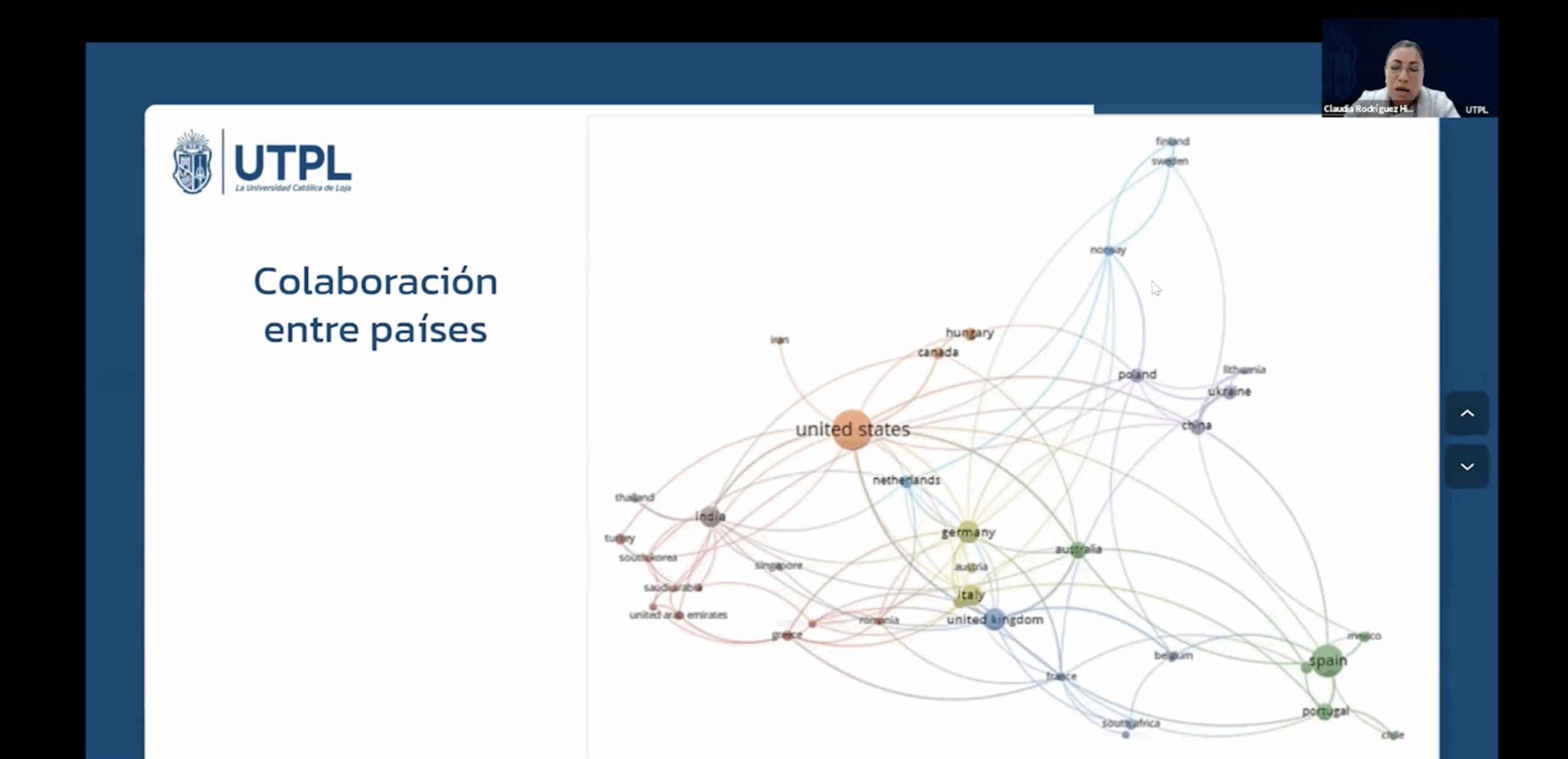
Brazil, Chile and Mexico are the countries where the most robust research on disinformation and AI in Latin America was found, according to the mapping. (Photo: Screenshot from the Global Summit on Disinformation on YouTube)
The study "Global Mapping of Research on AI and Disinformation," conducted at the Technical University of Loja (UTPL, for its initials in Spanish) in Ecuador, showed that although academic research on the topic has skyrocketed worldwide in the last two years, in Latin America this research is scarce, isolated and lacks regional comparison.
This vacuum not only limits the understanding of the phenomenon in the Latin American context, but also leaves regional journalism without key scientific references to confront the wave of increasingly sophisticated false content, said Claudia Rodríguez Hidalgo, professor and researcher in the Department of Communication Sciences at UTPL, and one of the authors of the study.
“Latin America is a region heavily affected by disinformation, especially due to its connection to political instability and social crises,” Rodríguez Hidalgo told LatAm Journalism Review (LJR). “It’s a research topic that is only just emerging [in Latin America], and the studies that have become most visible are those conducted in collaboration with universities in Spain, primarily.”
“Global Mapping of Research on AI and Disinformation” is a study of 347 academic articles from 2020 to 2025 on the intersection of AI and disinformation, indexed in Scopus, a database that compiles research published by high-level academic journals.
The authors found that research on the topic surged starting in 2023, coinciding with ordinary users’ mass adoption of generative AI platforms such as ChatGPT, DALL-E and Gemini. The year 2024 alone accounts for more than half of all publications since 2020, Rodríguez Hidalgo said.
The U.S. leads in research production on the topic, with 59 studies, followed by Spain, with 52, according to the study. Academic collaboration networks are primarily developing among countries in the Northern Hemisphere, especially between the United States and Western European nations.
Brazil, Chile and Mexico are the countries where the most robust research on disinformation and AI in Latin America was found. While studies also exist at universities in other countries, such as Colombia and Ecuador, these appear to be isolated, without collaborative ties to institutions in other countries, Rodríguez Hidalgo said.
“In the Latin American context, you see, for example, three authors [on an article], but all three belong to the same university,” she said. “And these are isolated articles. In other words, they are not part of a group of articles that demonstrates that it's a research topic they are actively developing.”
The professor said that many Latin American articles primarily address experiences within their own countries regarding these phenomena, such as how disinformation affected specific electoral processes or how AI has influenced social uprisings. However, she added, there are not many studies that make comparisons between the sociopolitical realities of different countries or regions, as is the case with research conducted in other countries.
Rodríguez Hidalgo said that in order to increase the production of academic studies on the subject in Latin America, it is necessary for researchers and universities to work more on building regional networks to address the issue collaboratively and from multiple perspectives.
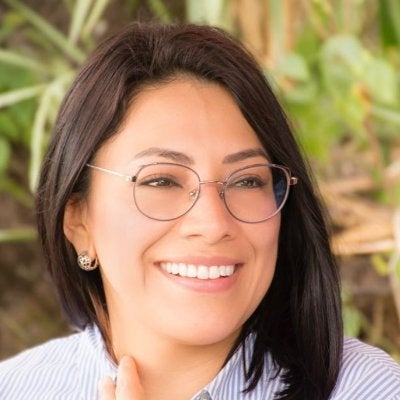
Professor Rodríguez Hidalgo said that Latin America is a region heavily affected by disinformation, especially due to its connection to political instability and social crises. (Photo: Claudia Rodríguez Hidalgo on X)
“We need to move beyond isolated efforts and regional consortia and observatories on AI and disinformation and establish systemic alliances with, for example, the Iberian cluster, which seems to me to be the most feasible option due to the language factor,” she said. “We also shouldn't overlook leading universities in North America and Europe.”
Forming research alliances with those regions, Rodríguez Hidalgo said, would be very beneficial for Latin America, not only because those countries have early access to cutting-edge technologies, but also because their universities have a more consolidated scientific infrastructure, with laboratories and centers specializing in AI, and their funding is more competitive than that of universities in Latin America.
“The leading countries in research are also the ones developing the models, platforms and technologies that are then researched by others,” she said. “In addition to that, they have already developed a stable model of international collaboration, with scientific networks that are currently robust and long-lasting. And that also boosts productivity and visibility.”
When establishing research collaborations with partner countries, it is important to ensure that defined agendas from Latin America are included to give visibility to the reality of the region and to integrate voices from the Global South into the discussion, Rodríguez Hidalgo said.
“Many times we end up collaborating on research that reflects the European or North American reality, but it doesn't always reflect the South American reality, which is what is missing from these narratives,” she said.
Journalists are on the front lines in the battle to defend the health of the information ecosystem, social trust, and democracy in general from the impacts of using AI to create disinformation, Rodríguez Hidalgo said.
However, the efforts of the press are ultimately insufficient given the rapid pace and complexity of this phenomenon, she said, adding that this is why academic research on this topic is more necessary than ever, she said.
“[The researchers] are telling them what new advances and tools are available, what is being researched on the topic, and what social effects they are having,” the professor said. “I believe that media and academia need to work much more closely together so that this research also reaches the public, and so that citizens understand that behind fact-checking there isn't simply the search for the exact data, but that a series of factors are involved, from journalistic work and mastery of technology to the investigation itself.”
While more and more academic research is emerging that focuses on describing the phenomenon of AI use in disinformation, significant gaps remain regarding issues such as the ethics of using this technology and media literacy to combat disinformation. These elements—along with journalism—are precisely the ones being considered as possible solutions to mitigate the problem, Rodríguez Hidalgo said.
“We are still focused on the phenomenon, on how it happens, what's going on, and I think we haven't quite managed to fully understand or describe it because something changes every day. So every day there's a new form of disinformation,” she said. “These new tools have been put into the hands of everyone, but nobody is teaching us how to use them in an ethical way.”
Rodríguez Hidalgo said she hopes the findings of this study will provide the academic community with clues to identify research opportunities.
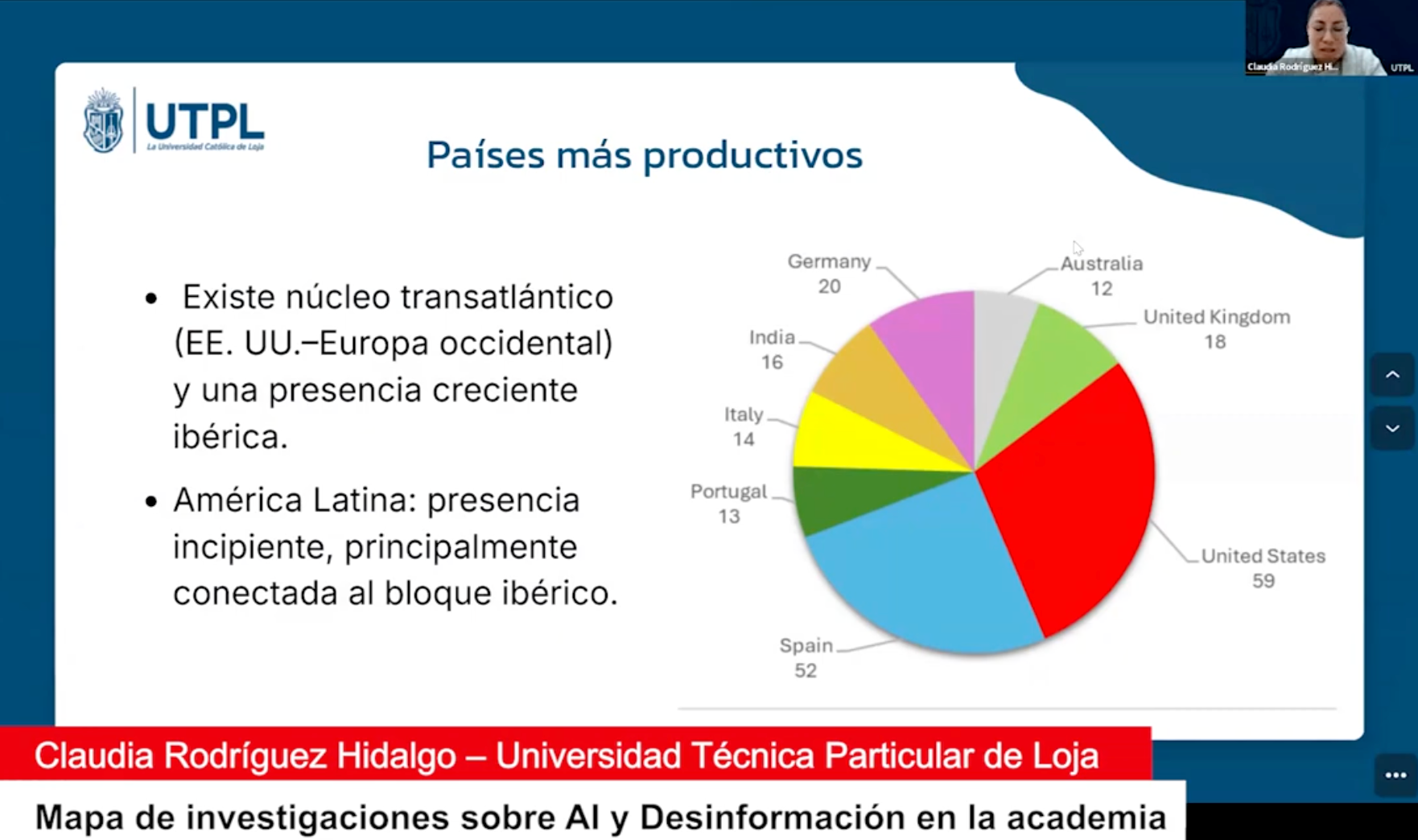
The study shows that the U.S. leads research production on disinformation and AI, followed by Spain. (Photo: Screenshot from the Global Summit on Disinformation on YouTube)
“Global Mapping of Research on AI and Disinformation,” which includes research data up to 2024, will be published in the journal Springer in early 2026, the professor said. She added that an update to the study is underway, mapping research on AI and disinformation from 2025.
Rodríguez Hidalgo said she expects the new mapping to be ready in the first half of 2026. She added that, according to data from the first half of the year, another significant increase can be seen in the number of academic studies on the topic worldwide compared to previous years.
“We already had almost double the number of articles, and that's only counting up to August 2025. [...] Scopus, for example, allows you to see publications that will be released in 2026, and there are already publications from 2026 [announced] on the topic,” he said. “That already allows us to see that research [on AI and disinformation] is increasing further.”


