
A major scandal is rocking the financial, political and journalism worlds in Brazil, and one man is at the center of it all: Daniel Vorcaro, former chief executive officer of the now defunct lender Banco Master SA.
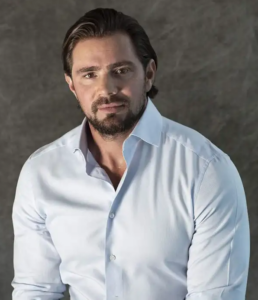
Daniel Vorcaro, a successful businessman with sky-rocketing success, started building his financial empire in 2018 when he bought a small bank and quickly made a fortune with it, promising larger-than-life returns.(Photo: Banco Master/Agência Brasil)
Vorcaro, a successful businessman with sky-rocketing success, started building his financial empire in 2018 when he bought a small bank and quickly made a fortune with it, promising larger-than-life returns.
The deck of cards started tumbling in November 2024 when the Brazilian Central Bank realized Banco Master could not uphold its obligations and Vorcarro was first arrested on fraud charges. His detention was part of "Operation Compliance Zero," which, according to the Federal Police, aimed “to combat the issuance of counterfeit credit instruments by financial institutions.” Though released on bail eleven days later, he was arrested once again in early March.
This time, Brazilian Supreme Court Justice André Mendonça granted a request from the Federal Police that argued Vorcaro was conspiring with other people to monitor and threaten enemies, be they in the financial system, former employees or even journalists. Lauro Jardim, one of Brazil’s most high-profile columnists, was said to be among the targets.
According to a document signed by Mendonça and released by the court, police investigators said the banker was also trying to obstruct the investigation.
A particularly concerning WhatsApp exchange captured in police investigations concerns what authorities say is the intent to attack an unnamed journalist in retaliation for published news that went against Vorcaro’s interests.
In the first message, according to the investigation, Vorcaro says “I should put people on this guy. To get everything from him.” He later alludes to the journalist again, “I want to have this [redacted] beaten up. Break all his teeth. In a robbery.” And still later, he writes “I want to beat him up,” with an associate asking “Can I? I’ll look into that,” to which Vorcaro responds, “Yes.”
The banker's defense told the media his quotes were taken out of context and that he was only venting. “I have never determined or would determine aggression or any kind of violence,” he said.
Initially, the name of the target – Lauro Jardim – was censored in the court document. However, a quick copy and paste revealed the reporter's name. The revelation shocked many, but it also unleashed a massive wave of solidarity among journalists, especially within a country so sensitive about violence against the press.
O Globo, where Jardim works, said in a public statement that those allegedly involved in “this criminal plot must be investigated and punished to the full extent of the law. O GLOBO and its journalists will not be intimidated by threats and will continue to follow the case and bring to light information of public interest.”
The Brazilian Association of Investigative Journalism (Abraji, for its initials in Portuguese), via its directors board, said that the threat represents a serious attack on freedom of the press, the physical integrity of media professionals and the democratic rule of law itself.
The National Federation of Journalists (FENAJ) and its associated unions also publicly reaffirmed that any attempt at intimidation, threats or violence against journalists is not an isolated incident, but part of an environment of constant hostility against the press in Brazil.
“Attacking a journalist is attacking society as a whole, which depends on free, critical and independent information,” it said.
Unclear ties with media outlets
The tentacles of this mega scandal have reached even farther into the journalism world, with two outlets being questioned about possible financial ties with the fallen banker.
In messages obtained by police that were released by the court, one of Vorcaro’s associates implies payment to “DCM” and two unnamed “editors.” No other details, such as what the payment was for or what DCM refers to, were included. DCM is the moniker used popularly by left-leaning media outlet Diário do Centro do Mundo. However, in a public statement, it denied any ties to those being investigated.
“We do not know what the acronym ‘DCM’ refers to in that specific context. What can be said with certainty is that it does not identify Diário do Centro do Mundo or any activity of the media outlet. DCM did not receive any funds, payments or benefits from the individuals investigated in the operation and has no connection to the facts uncovered,” it said.
Kiko Nogueira, current editor in chief of DCM, reaffirmed to LJR the outlet's public position of not having received “a single cent from Daniel Vorcaro or Banco Master.” Nogueira added a commentary on the banker's ties with other outlets: “His media links are more than well known.”
Although DCM denied ties with Vorcaro, investigators told newspaper Folha de S.Paulo that the DCM cited in the decision is indeed Diário do Centro do Mundo. Currently, the Federal Police is investigating these alleged links.
According to Malu Gaspar's column in O Globo, messages obtained by police investigators – but not in documents released by the court – revealed that Vorcaro negotiated and made payments to O Bastidor's director and veteran reporter, Diego Escoteguy. Federal Police say the payment was for the outlet to report on the banker's interests, according to the column.
Questioned by reporters, Escosteguy said the payments he received were related to sponsorship and advertising and therefore strictly professional. The federal police, in this case, are not investigating the supposed links between the fallen banker and the outlet.
In an email with LJR, Escosteguy said he received the accusations with sadness and dismay since he and his outlet were cited in a ‘flippant and irresponsible’ manner by the Federal Police. Escosteguy reaffirmed that he and the outlet did not receive compensation to publish information that might be of interest to Vorcaro.
“As far as we know, O Globo had access only to excerpts from it, apparently leaked with the purpose of causing reputational damage. Because we do not have access, the burden of proof is reversed: it falls to us, those mentioned, though not accused of a crime, to try to prove that something did not happen. In an environment polluted by platform algorithms and the country’s polarization, mere mention is enough to cause harm. There is no room for reasonable doubt or empirical and logical analysis of facts.”
Leandro Demori, former executive editor of the Intercept Brazil and current head of ICL Notícias, said that these alleged ties between financial agents and media speak to a deeply rooted issue in Brazil. Without citing the aforementioned cases of DCM and O Bastidor, Demori said the media sector is already highly entangled with big financial groups.
“Large media outlets are controlled by agents of the financial market or by banks,” he told LJR. “Large advertisers, like Master became, have always invested in the press to buy protection against criticism.”
Demori added that it’s important to have outlets in the country dedicated to media analysis and investigations.
“The Observatório de Imprensa offers criticism through articles, but the key would be to conduct journalistic investigations, treating media companies as legal entities. There is a great deal of corporatism,” he said.


