
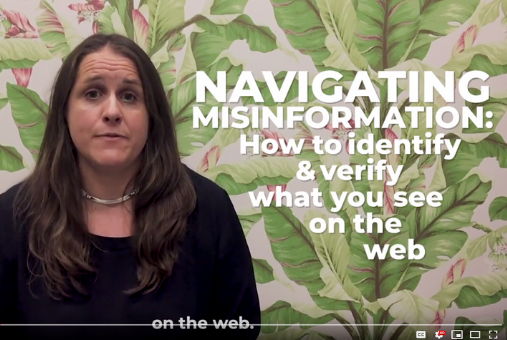
Learning how to verify content from online sources is more important each day, especially as the amount of false content on the internet grows.
When Yusuf Omar spoke to a crowd of media executives, academics and journalists last April in Austin, he told them “Our future is in our ability to curate and aggregate and listen to the voices of mobile storytellers around the world.”
Newsrooms around the world are using automation to produce earnings reports, identify fact-checkable statements, and provide updates on court cases, among other functions. It’s now imperative that journalists understand the power and pitfalls of these technologies.
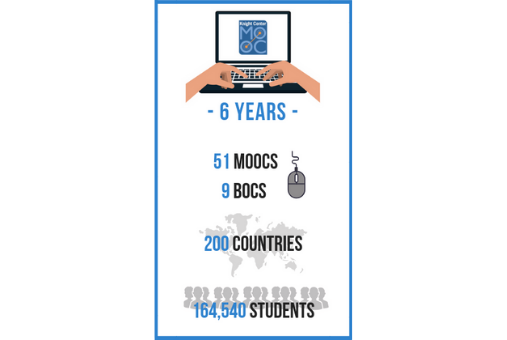
The Knight Center for Journalism in the Americas is celebrating the 6th anniversary of its program of massive online courses in journalism that has an unparalleled reach around the world.
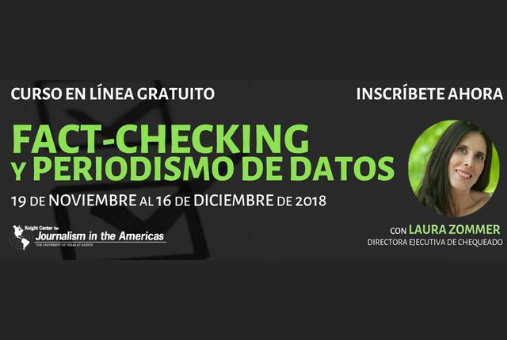
With media today, identifying fact from fiction can be a challenge. Yet, it’s in this same environment that fact-checking organizations have sprouted and continue to grow around the globe.

For Teri Finneman, the Knight Center’s latest free online course on podcasting came at just the right time.
Artificial intelligence, machine learning, deep learning. These are some terms that are in high demand in many professional fields, but which are not yet familiar to many in news media.

Video production has become an increasingly important skill for journalists who want to be versatile and tell stories in a variety of ways.
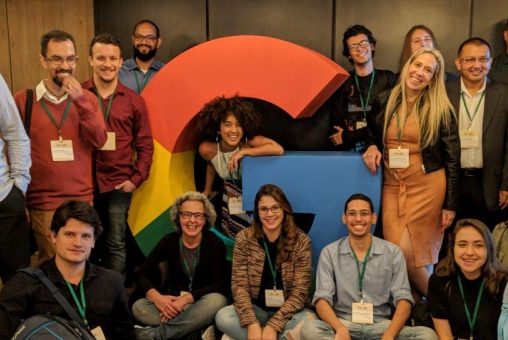
Eighteen journalists who completed massive online Portuguese courses with the Knight Center for Journalism in the Americas were at Google São Paulo on Oct. 1 to attend exclusive workshops on electoral coverage and fact-checking.
An online course on the complex programming language R recently ended with more than 3,300 registered students from 131 countries and all instructional materials for the course are now available. The materials are available to the general public and will act as an ongoing resource for those who are interested in learning more about R.
In its latest efforts to help journalists stay up-to-date with the digital revolution, the Knight Center is offering the Massive Open Online Course (MOOC) “Intro to R for Journalists: How to Find Great Stories in Data.”
Five years after its implementation, UNESCO's project to train judges, prosecutors and other judicial operators in Latin America on freedom of expression and access to information has become the most ambitious judicial training program in the region and has led to concrete results in the courts