
Jennifer Ávila, co-founder and director of Honduran digital media outlet Contracorriente, sees cultural journalism as fundamental to its work. She is convinced that it serves as a “respite” for audiences amid the “oppression” of bad news spreading across the globe, as she told the LatAm Journalism Review (LJR).
Yet, it’s not about denying reality. If anything, Contracorriente is known for its reporting and stories on human rights violations, exile, corruption and repression. However, it also aims to offer a creative space where readers can participate.
“Our vision is to offer people a respite, but also to give them a glimmer of hope,” Ávila said. “Yes, there are difficult stories—wounds we must speak about—but we must speak of them with honesty, and speak of them from the heart.”
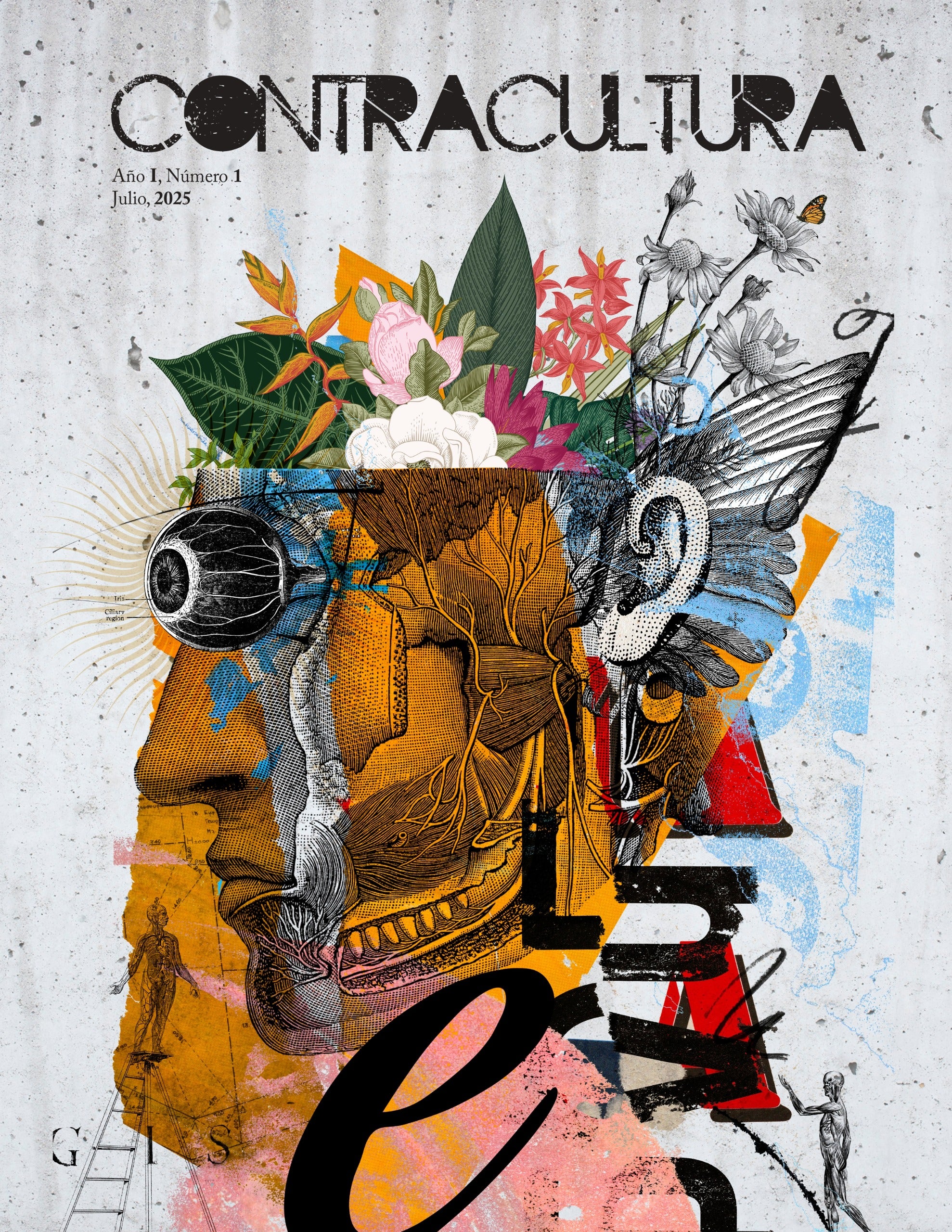 The outlet’s cultural section, Contracultura, was created with that in mind. This cultural project brings together writers from Honduras and Central America to tell the region’s stories differently.
In nine years, more than 50 authors have portrayed the region through comics, illustrations, narrative journalism, short stories, poems and other formats.
From the very beginning, Ávila said, this space has told the stories of communities in a more diverse way—one that reflects the cultural changes taking place in Honduras and the region.
Contracultura has such an impact that Ávila believes a segment of its audience and contributors are more closely tied to the cultural sphere than to Contracorriente in general. So, it was unsurprising that they decided to turn Contracultura into a magazine in what became the media outlet’s first print publication.
The idea had been on her mind since 2024 and gradually took shape in settings such as the Festival Centroamérica Cuenta, founded by Nicaraguan writer and journalist Sergio Ramírez. Ávila said that she, Ramírez and others involved in the festival discussed the need for a print magazine for the region.
“What we really need most right now is a cultural product that tells the story of Central America—from the perspective of pain, but also from the perspective of hope and the creativity of the people of this region,” Ávila said.
The idea became a reality in July 2025, when the first edition of the magazine was published. On Feb. 27, it was announced as the winner of the King of Spain Award in the “Cultural Journalism” category.
“The jury agreed in highlighting the decision to publish in a format—print—that is disparaged in the era of artificial intelligence, and praised the diversity of themes and artistic expressions,” reported news agency EFE, which organizes the awards jointly with the Spanish Agency for International Development Cooperation (AECID, for its Spanish initials).
In addition to recognizing the transition to print, the jury also highlighted the project for “providing society with a cultural window onto Central America.”
“Here on the team, it was absolute madness,” Persy Cabrera, content coordinator at Contracultura, told LJR after receiving the award. The monetary component of the prize (10,000 euros), he said, will fund a second edition.
Although the plan is for the magazine to publish twice per year, the second issue of 2025 was delayed by the elections in Honduras, which consumed the time of the entire Contracorriente team, Cabrera said.
But beyond the money, the award validates Contracorriente’s work and opens up spaces for participation.
“Many people have come to learn that there is a group of individuals from an independent, women-led media outlet in Central America who joined in on this crazy idea of creating and publishing a print magazine about Central America,” Cabrera said.
The print run for the first edition—as well as for subsequent publications—consisted of 400 copies, and was distributed across five bookstores in Honduras and Guatemala. The cost per copy is about US $12. Aside from donations and awards, a significant portion of its funding comes from advertising.
“It is not easy, but I must say that selling advertising is more feasible for a cultural product than for independent journalism,” said Ávila, who added that the second edition will be published in April, and a third before the end of 2026.
Inspired by publications like Pikara Magazine, Altair, the defunct Etiqueta Negra and even The New Yorker, Ávila wants Contracultura to become a collectible item—but, above all, to evoke cultural identity.
The widespread exile across several Central American countries, she noted, has severed the very roots unique to each individual—an aspect she considers key to culture.
“Dictatorship renders completely dry the soil that was once fertile for the arts. If there are no artists creating—if there are no people telling stories, imagining things, creating works of fiction, or writing poetry—it creates an arid environment for cultural journalism,” Ávila said.
The first edition features stories such as that of Monroy y Surmenage, a band banished by the Nicaraguan regime after singing about the revolution; an article about how Salvadoran President Nayib Bukele seeks to control everything, even cultural spaces; a comic exploring what it is like to grow up as a queer person in a militarized zone; poetry honoring a murdered environmental activist; and conversations with writers Sergio Ramírez and Horacio Castellanos Moya.
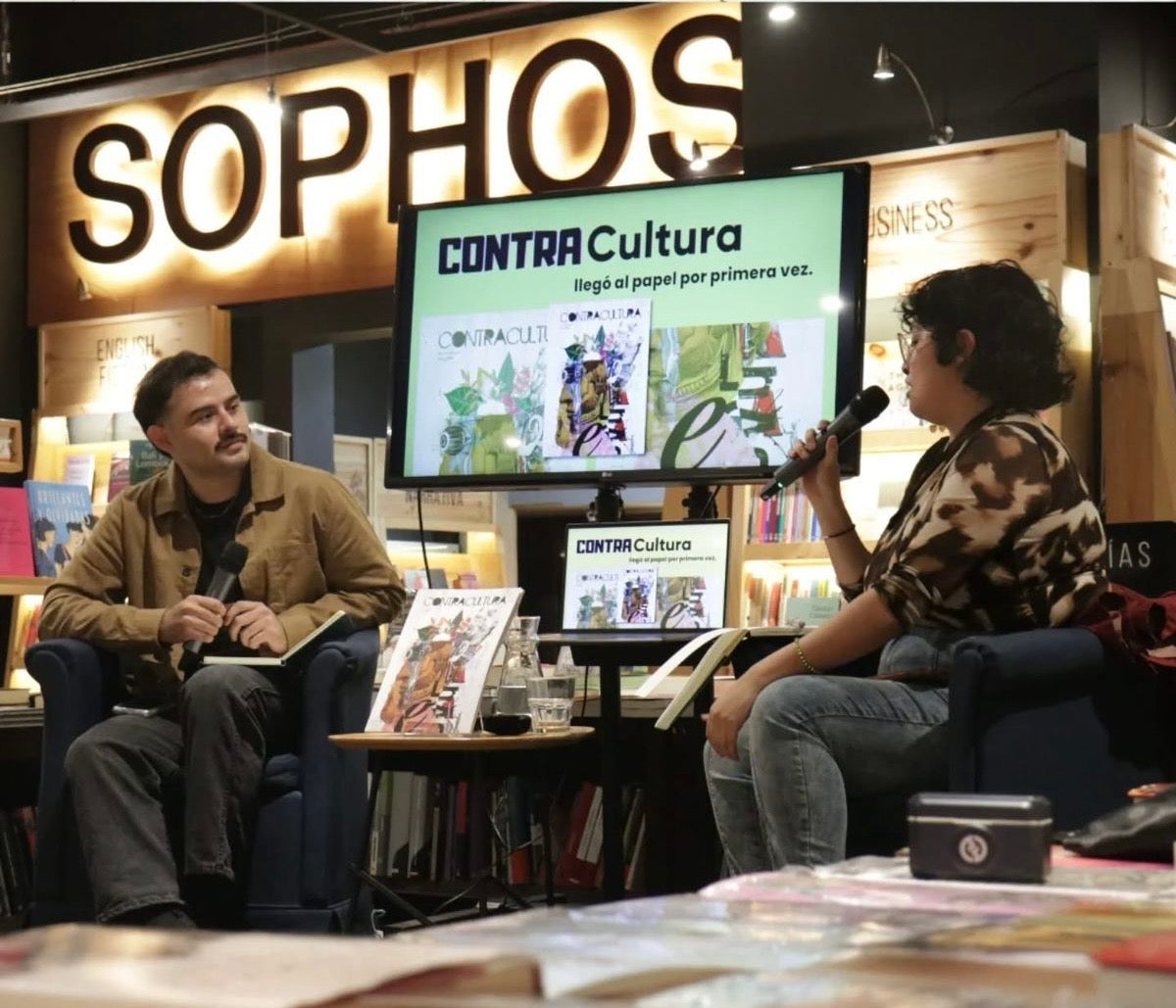
Persy Cabrera, content coordinator for the magazine Contracultura, with Ámbar Nicte, a Honduran illustrator who participated in the magazine, speak during a presentation at the bookstore Sophos in Guatemala City. (Photo: Courtesy Contracorriente)
However, Contracultura seeks to create spaces beyond the pages of its magazine. Through the Contracorriente Fest—a festival of journalism and art—they have successfully secured opportunities for funding and learning. Furthermore, Contracultura has developed cultural laboratories that have also incorporated a culinary dimension, Cabrera said.
One session centered on machuca soup, a traditional dish of the Garifuna people of Honduras. Two women from the community spoke about the food and their traditions while preparing the meal for the audience. The second workshop focused on the baleada, an iconic Honduran dish created during the workers' strike of 1954. It featured a strike leader as a guest, in addition to the preparation of baleada.
Claudia Neira Bermúdez, director of Festival Centroamérica Cuenta, agrees that producing cultural journalism is a challenge for the region. However, initiatives like Contracorriente’s demonstrate that this form of journalism “is taking root,” she told LJR.
“Above all, it allows us to continue challenging the established canon that Central America must always remain that slender little waist of the continent, unable to begin building muscle so that it can compete in other leagues,” Neira said.
Like Ávila, Neira believes that exile has also left its mark on cultural journalism in the region. The very festival she directs has become a traveling one since 2018, when conditions in Nicaragua no longer permitted it to be held there. However, for Neira, exile itself offers opportunities to create other forms of culture—and, consequently, a different kind of journalism.
“We are creating new territories centered on the word and on culture, and that is truly beautiful,” Neira said. “The Nicaragua I remember is a Nicaragua that no longer exists today, because it is a Nicaragua shaped by the people who lived there at a specific moment in time. But we are creating other Nicaraguas and other ‘Central Americas’ wherever we go.”
That is why she believes Contracultura magazine was needed in the region.
“We cannot continue to define ourselves merely as individual countries, because Central America is much more than just a country,” Neira said. “And [Contracultura] is acting as a pioneer and, above all, establishing alternative Central American narratives.”
This article was translated with the assistance of AI and was reviewed by Teresa Mioli.


