
The recent release of 19 Venezuelan journalists – some of whom had been detained for more than two years – was a bitter sweet moment for the country’s press.
Despite no longer being in prison, those freed are living with precautionary measures, face legal cases and have health problems, according to the National Union of Press Workers (SNTP, for its initials in Spanish).
They are under a gag order, must report to authorities every 30 days and cannot leave the country, as reported by Agência Pública.
What’s more, at least five media workers remain in detention and face various charges such as conspiracy to commit a crime, treason, incitement to hatred and terrorism, SNTP says.
“These legal instruments are systematically used to persecute news coverage, critical opinions and reporting on crime or protests in a country where press freedom continues to be systematically undermined,” Artur Romeu, director of RSF’s Latin America office, told LatAm Journalism Review (LJR).
One of the most worrisome cases is that of Rory Branker, an editor for media outlet La Patilla who was detained on Feb. 20, 2025, by officers of the Bolivarian National Intelligence Service (abbreviated in Spanish to Sebin) as he was leaving his Caracas home.
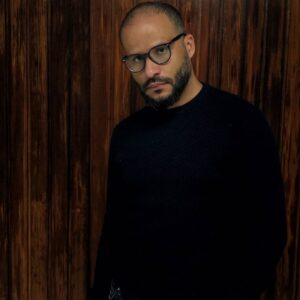
Venezuelan journalist Rory Branker was detained on Feb. 20, 2025. (Photo: Courtesy La Patilla)
Branker's partner, who was with him that day, said officials informed them that the journalist had been taken to the El Helicoide detention center, a place known for the imprisonment of hundreds of political prisoners and rife with allegations of human rights violations.
Branker’s partner was forced to return to Branker's home, which was then raided without a warrant, the NGO Espacio Público reported at the time. Three computers and two cell phones were confiscated.
Although his detention at El Helicoide was presumed, neither Branker's family nor his media outlet had any information about him for almost seven months. It was thanks to national and international pressure – including the Inter-American Commission on Human Rights (IACHR) granting him precautionary measures on Aug. 27 – that his mother was finally able to see him.
Anna Branker said that "given the circumstances, his physical condition is acceptable," as reported by SNTP on Sept. 15, when the visit took place. Two days before this, Branker called his mother to tell her that he was being held in the cells of the Bolivarian National Police in Boleíta, Caracas.
His already difficult situation worsened in October 2025 when his brother, Erman Branker, who was the only immediate family member authorized to bring him food in Boleíta, died of a heart attack, as reported at the time by the NGO Justicia, Encuentro y Perdón (JEP for its initials in Spanish).
In a further escalation of events, on Dec. 8, the country's authorities transferred him again without informing his family or legal team, according to RSF. The SNTP said on its X account that Branker is now being held in Tocorón prison in the state of Aragua.
“This is a human tragedy because if you have a prisoner, you can defend them, you can get them a lawyer, and you can defend their rights, but here there is no formula,” Alberto Federico Ravell, co-founder and director of La Patilla, who is currently in exile, told LJR.
And Branker's situation is quite worrying for several reasons, Luis Carlos Díaz, a Venezuelan journalist and security consultant, told LJR.
Among those being the death of his brother, the health problems of his mother, the exile of the director of the media outlet he worked for, and his legal team’s inability to communicate with him.
“He is perhaps the journalist for whom we have campaigned the most,” Díaz said.
Branker is accused of treason, financing terrorism and conspiracy, according to the SNTP. However, neither Díaz nor Ravell are very clear about the charges against him, and they said that he has never been brought before a court.
“Among the irregularities that exist in Venezuela, this also happens, meaning they deny you due process, the right to a defense,” Díaz added.
In an article marking 11 months since Branker was first detained, La Patilla said it “would not rest” until he was released.
“His case will remain an open wound and the most uncomfortable proof that the offensive against the press in Venezuela is not over,” the publication said.
Branker's arrest was perhaps the most serious incident in a series of attacks against La Patilla, including cyberattacks that have taken its website offline and the blocking of its site in Venezuela.
La Patilla, Ravell said, has been characterized by its tough editorial stance against the government. Years ago, in 2022, Diosdado Cabello, first vice president of the United Socialist Party of Venezuela (PSUV), directly threatened the media outlet on his television program, stating: “Now, we're coming for La Patilla.”
In August 2024, La Patilla staff journalist Ana Carolina Guaita was arrested and released later that December.
The media outlet continued its work. In the last year, it has published information based on investigations from the United States that allegedly link the party of then-president Nicolás Maduro to drug cartels, and even after Branker's arrest, it has continued with these publications.
One day after Branker's arrest, La Patilla’s website was offline for unknown reasons.
Therefore, Ravell believes that Branker is above all "a hostage" of the regime, and in particular a strategy by Cabello against Ravell himself and La Patilla.
“It has been a very painful experience,” Ravell said. “[Branker] is a special person at work; no one has ever had a complaint about him. He is one of the most beloved people at La Patilla; everyone loves him, my family, all of our families.”
Once they learned where he was being detained, La Patilla has managed to send him medicine and food, Ravell said.
And despite these threats, journalists on the ground have continued with their reporting.
“Those who have stayed have stepped up. And besides, they are not publishing false information,” Ravell said.
The release of journalists on Jan. 14 took place within the framework of the so-called "transition" following the capture of Nicolás Maduro by the U.S. government in a military operation on Jan. 3, 2025.
Since then, Foro Penal has recorded the release of 143 political prisoners, including journalists.
“RSF welcomes the release of the journalists and recognizes the importance of this step,” Romeu said. “However, it is important to mention that even though we have seen releases, not much is yet known about the charges and conditions of their release.”
RSF also said in a statement that the conditions for practicing journalism after the US military action “have deteriorated even further.”
“Intimidation, direct threats, phone searches, and forced deletions of journalistic content — practices that became widespread after the 2024 elections — are now compounded by new dangers,” RSF said. “These threats no longer originate from a single, identifiable state authority but from multiple actors, significantly increasing insecurity for media professionals.”
Reporting on events following Nicolás Maduro's capture led to the detentions of at least 14 media workers, most of them correspondents for international media outlets. All were released after several hours.
This was compounded by authorities denying entry to the country to several international journalists despite having work visas. Many of them spent days in the Colombian border city of Cúcuta, but have returned to their home countries after being refused entry, a journalist in Cúcuta told LJR.
RSF urged the authorities to "to allow foreign journalists to enter the country and to stop restricting the work of local media.”
This article was translated with AI assistance and reviewed by Teresa Mioli.


