
Lourdes Pedraza, a journalism student at Blas Pascal University in Córdoba, Argentina, gets her news while browsing social media, mainly Instagram.
Although she follows traditional media outlets, she feels she understands the news better when it is explained by digital personalities such as Feli Paganti, an Argentine journalist and content creator based in London.
“The language she uses is very approachable and she usually gives context for what she’s communicating,” Pedraza told LatAm Journalism Review (LJR). “What’s good about these ‘journalist influencers’ is that when they publish news, they present it in a more relaxed way that grabs people’s attention.”
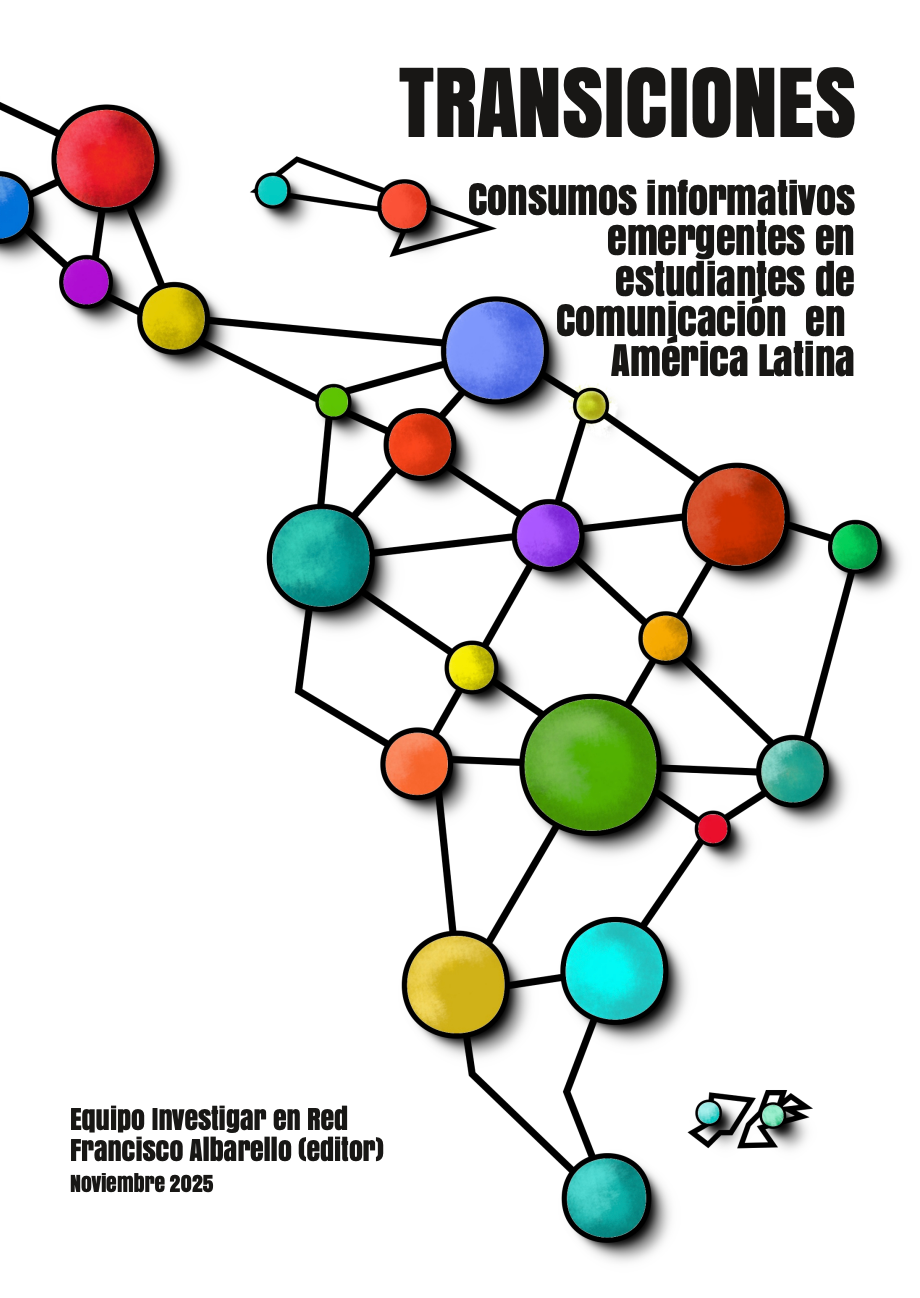
The study analyzed the habits of nearly 3,000 communication students from 33 universities in nine Latin American countries (Photo: Screenshot)
Instagram is also the main channel for Paulina Vivani, a communication student at Austral University in Pilar, Argentina. She said she usually limits herself to reading the headlines and captions posted by traditional news outlets. Only when she wants to learn more does she click on links or search on Google.
“At the start of the day I try to set aside time to read Clarín’s digital newspaper or see the news that media outlets and journalists post on Instagram,” Vivani told LJR. “I complement that with independent journalists who used to work for major outlets and who go deeper into specific topics in videos that are one-and-a-half or two minutes long.”
The news consumption habits of Pedraza and Vivani are similar to those of most communication and journalism students across Latin America, who mainly get their information on smartphones and incidentally while browsing social media, according to the study “Transitions: Emerging news consumption among communication students in Latin America.”
Published in November 2025, the study analyzed the habits of nearly 3,000 communication students from 33 universities in nine Latin American countries. Its methodology included surveys and focus group interviews.
The research, produced by Investigar en Red, a regional network of professors and researchers in communication and journalism programs, also found that students prefer the approachable, informal and empathetic language used by content creators over the style of traditional media outlets. It also found students are aware that digital platform algorithms determine the information they receive, but they also voluntarily avoid consuming news with negative connotations.
One of the goals of the study, said Francisco Albarello, editor of the report and a communication researcher at Austral University, is to influence the academic curricula of journalism and communication programs across Latin America. Journalism and communication schools face the challenge of training journalists who can operate in an information ecosystem shaped by fragmented and superficial consumption. This means preparing students to produce content with professional rigor while promoting critical and balanced news consumption.
“From universities, we need to give them tools to teach the critical use of something they already use superficially and intuitively,” Albarello told LJR. “That’s our challenge.”
The research found that, for journalism and communication students, social media platforms have stopped being simple interfaces and have become “media outlets” that offer opportunities for interaction: sharing and commenting live and even themselves becoming creators of content.
Where previous generations might have cited media companies such as Clarín or Telenoche as their sources of information, today students mention technology companies such as YouTube, Instagram or X, said Marcela Farré, one of the authors of the report and director of the communication and journalism programs at Blas Pascal University.
Most students who consume information from traditional media now do so through those outlets’ social media accounts, the report said. Media accounts are the primary source of information, followed by journalists’ accounts and, in third place, influencers and public figures.
X (formerly Twitter) is valued for its immediacy, constant updates, interaction and variety. TikTok appeals to students for its brevity and informality, but they see it as the platform most prone to misinformation, according to the report.
Of all platforms, however, Instagram emerges as the main gateway to news, although consumption there tends to be superficial and fragmented and part of broader social interaction. By contrast, YouTube is used as an intentional search platform, where students go when they want to learn more about a topic, the research found.
“When they go to YouTube to search, there is an interest in information and an interest in having it explained well,” Farré told LJR. “That’s also where students show a willingness to listen to a long video and a deeper explanation.”
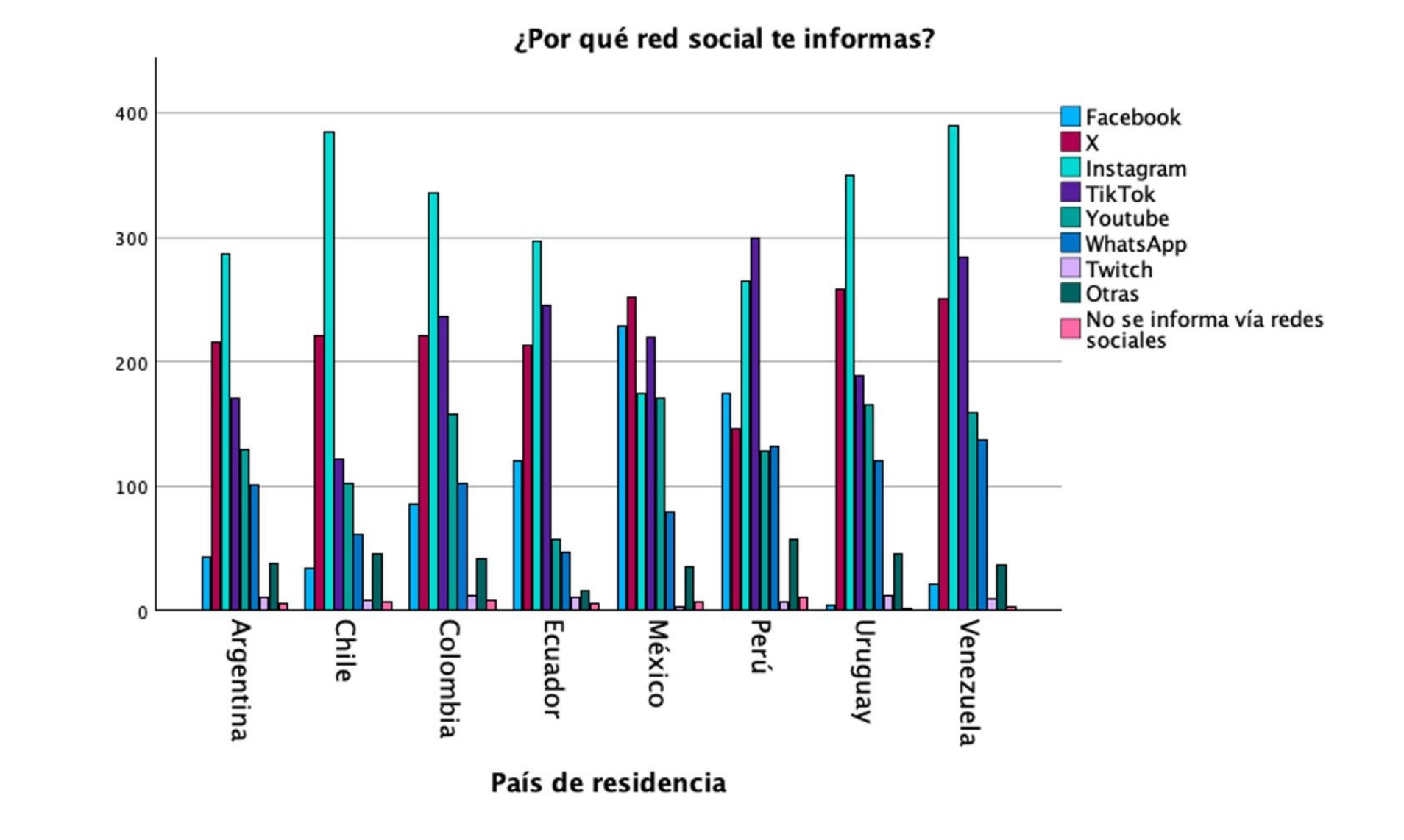
Instagram is the main gateway to news for journalism students among social media platforms, the report found. (Photo: Albarello F., "Transiciones. Consumos informativos emergentes en estudiantes de Comunicación en América Latina", CC BY-NC-SA)
The study found that students value the approachable, informal and empathetic language used by independent journalists or influencers more than the style of traditional media, which the report describes as “serious and politicized.” One element that appeals to this audience is the feeling that they are interacting with someone similar to themselves.
“They really value the peer who informs them,” Albarello said. “They follow many influencers or young journalists around their age who explain things in a more accessible and relaxed language they identify with, and whose faces they can see.”
Farré said this represents an opportunity for universities to strengthen training in the skills students value, helping form communicators who combine professionalism and rigor with the ability to explain reality in depth and across different platforms.
“Some of these interactions happen with multiple voices that are not necessarily media outlets or journalists, but for students they can be just as valid — or even more valid — than journalists or media organizations,” Farré said. “Personalizing information through a close and approachable style generates transparency and trust.”
Albarello said some universities in Latin America are already training students with content-creation skills, such as the Politécnico Grancolombiano. Farré added that this presents an opportunity to train news influencers who use the tools of social media without neglecting the work done by professional journalists.
“We need to train them to understand the difference between professionally produced information and information that is not,” Farré said. “In other words, if they are influencers, they should be influencers who do things the right way.”
Despite studying communication and journalism, most respondents said they feel only “relatively informed” about current events. According to the research, most believe they are well informed about their preferred topics but not about the news they “should” be informed about.
“They inform themselves more about topics that interest them,” Albarello said. “But then there’s top-level news where they are somewhat aware of what’s happening at a superficial level, but not too much because it doesn’t really interest them.”
Although students know their field requires them to stay informed about many topics, they admit that at times they intentionally — or unintentionally — avoid certain news content, either because of information overload or the negative tone of some news.
“Many times I feel bombarded with news: everyone talks about the same thing but tries to find a different angle to stand out and get picked by the user,” said Vivani, the Austral University student. “That saturates me.”
Albarello said focus groups in the research showed that during periods of intense news coverage — such as the COVID-19 pandemic or the 2019 social unrest in Chile — the negativity of news can shrink young people’s interest in staying informed. At those moments, they tend to avoid news and turn to other types of content.
“I like to stay informed about most of what’s happening,” said Pedraza, the Blas Pascal University student. “But it’s true that many times news about crime cases involving minors, murders and things like that are not something I enjoy reading.”
Because smartphones are the main device students use to access information, news consumption inevitably follows a logic of personalization, Albarello said. That is why it is not surprising that many respondents “turn off” certain topics and keywords so their social media apps do not show them subjects they do not want to see.

Journalism scholars Francisco Albarello (left) and Marcela Farré (right) were part of the team behind the report. (Photo: X)
That, Albarello said, carries the risk of becoming trapped in an “algorithmic bubble.” The good news, he added, is that the report found that — unlike other groups of young people — journalism students are aware of this dynamic.
“But what is missing,” Albarello said, “especially among communication students, is algorithmic agency: what do I do with that? How do I respond to that reality and use the algorithm to my advantage?”
Albarello said journalism schools face the challenge of teaching students strategies to break out of that bubble. One of them, Farré added, is “educating” the algorithm.
She said that at recent student conferences in Argentina, young people have discussed strategies to escape the bubble, such as creating more than one social media profile, following accounts from different ideological positions and developing non-homogeneous consumption patterns.
“Confusing the algorithm is a bit of the strategy,” Farré said.
This article was translated with the assistance of AI and was reviewed by Jorge Valencia


