
Omario Castellanos was scheduled to graduate with a degree in communication in November 2025. After years of hard work to pay for his studies at the private Yacambú University in his native Barquisimeto, Venezuela, and to keep several scholarships, his dreams of becoming a communication professional were finally coming true.
But that long-awaited moment never came. On the night of Oct. 16, 2025, Castellanos, 25, became yet another political prisoner in Venezuela. He was arrested along with his mother and brother after police officers raided their home without a warrant, as reported by Venezuela’s National Union of Press Workers (SNTP, for its Spanish initials).
During the operation, Castellanos had phones, a camera and a personal computer confiscated. He used them to do his work as a reporter and photographer for the digital media outlet SoyLarense.com.
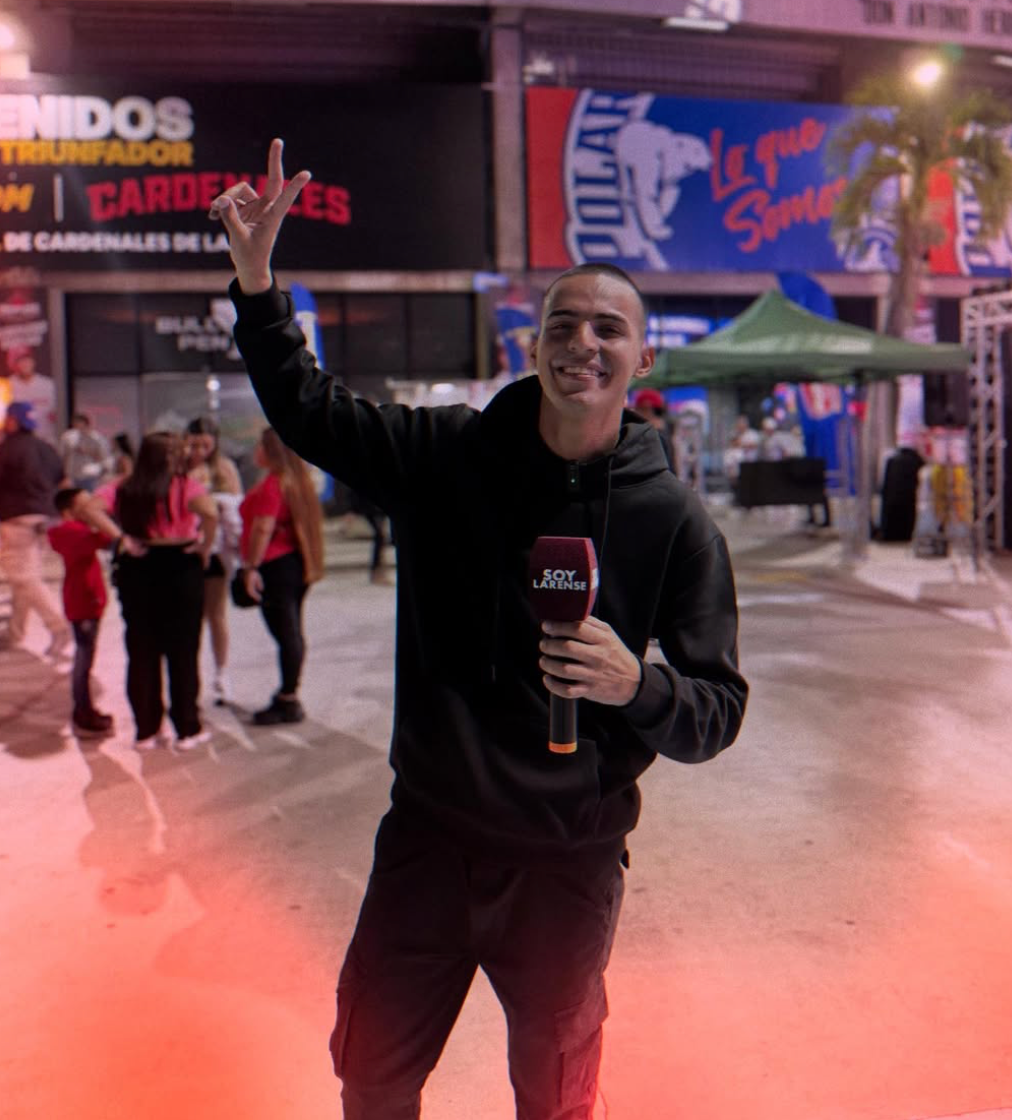
Omario Castellanos mostly covered sports and tourism, and stayed away from reporting on social or political issues. (Photo: Omario Castellanos' Instagram profile)
Castellanos mostly covered sports and tourism, and stayed away from reporting on social or political issues. It was precisely to avoid the risk of being detained in a country where, in recent years, dozens of journalists have been arrested for covering protests or interviewing opposition figures.
However, his mother and brother were involved in politics, the latter being the coordinator in Lara state for Vente Joven, the youth wing of the opposition party founded by María Corina Machado. Castellanos points to this as the reason for his detention.
“Yes, I did get involved [in covering political matters], but because of that same fear, there came a point where I said, ‘I’m not going to do it because they could put me in jail,’” Castellanos told LatAm Journalism Review (LJR). “And they put me in jail anyway.”
While detained, Castellanos became one of the most visible faces of Chavista repression internationally. He attributes the notoriety to his status as a journalist.
In February 2026, more than ninety days after he was first imprisoned and accused of “terrorism, incitement to hate, criminal association and treason,” he was finally released, while his mother and brother were freed two weeks later. US forces had captured Nicolás Maduro the month before and interim President Delcy Rodríguez ordered scores of political prisoners freed as a "unilateral gesture of peace".
By Thursday, Feb. 26, the 28 journalists, communications professionals and press workers who had been detained were all released. However, most – including the Castellanos family – had precautionary measures, such as restrictions on travel or having to regularly check in with the courts.
Castellanos, his mother and brother hope to soon be completely free, following the Feb. 19 enactment of the Amnesty Law for Democratic Coexistence, promoted by Rodríguez’s government. The legislation provides for the dismissal of criminal proceedings against certain individuals detained or prosecuted for political reasons, which could benefit both those who remain in prison and others who face precautionary measures or are in exile.
However, activists and human rights organizations question the true scope of the law. They point out that, rather than a mechanism for reconciliation or reparations, it could be a political strategy by the ruling party to improve its image and consolidate impunity in cases of arbitrary imprisonment.
Almost two weeks after the law was enacted, more than 8,000 people who were detained or released with precautionary measures have requested the dismissal of the charges against them, according to newspaper El País.
Castellanos said he and his family have already requested the resolution of their legal cases under this amnesty law through the public defender who has been assisting them since their detentions. He added that they are optimistic it will all be resolved successfully.
The Venezuelan amnesty law is limited to people detained during 13 specific periods from 1999 to 2026, mostly related to periods marked by protests and violence. However, activists and human rights organizations question the true scope of the legislation.
Venezuelan journalist and cyberactivist Luis Carlos Díaz believes that, far from being a reparative measure, the law is more of a political strategy to try to clean up the image of Chavismo and "sweep under the rug" the many arbitrary actions with which politically motivated arrests have been carried out in Venezuela.
“The Amnesty Law is just a political excuse that actually delays and hinders a process that could be immediate: granting complete freedom,” Díaz told LJR. “It tries to create an impossible situation, which is to force political prisoners to ‘appear in court,’ meaning going to court or sending their lawyers to argue that they should be released from legal proceedings based on lies.”
Díaz, who was arbitrarily detained in 2019 for his critical comments about the government and later released with precautionary measures, criticizes the legitimacy the law gives to courts, which many have accused of fabricating cases against political prisoners.
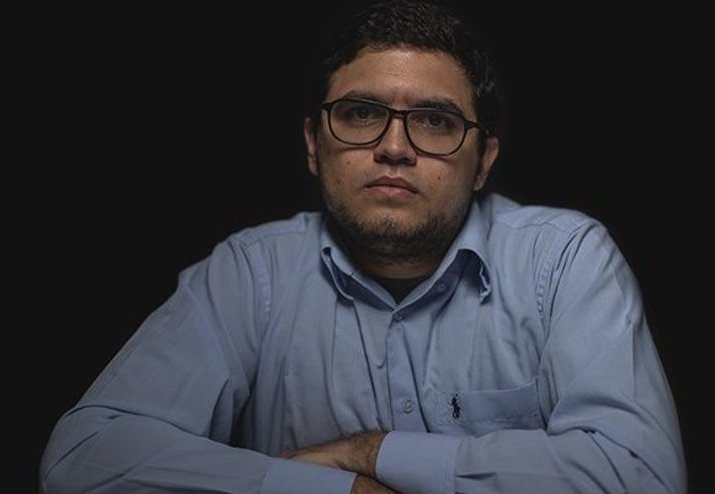
Journalist and activist Luis Carlos Díaz said Venezuela’s Amnesty Law could end cases against political prisoners but leaves the regime's repressive apparatus intact.
“Most people outside Venezuela don’t understand this: when we talk about courts, we’re not talking about an independent judiciary,” Díaz said. “They are corrupt courts, and they are also politically controlled by the ruling party.”
The Committee of Relatives and Victims of the Events of February-March 1989 (COFAVIC) criticized the law for failing to establish transitional justice procedures, such as a truth commission, reparations mechanisms or measures to acknowledge acts of political violence. Furthermore, COFAVIC indicated that the law mandates the destruction of records and files, which could bury evidence of crimes committed against political prisoners.
“This phenomenon is, in fact, known in international jurisprudence as ‘impunity by absorption’: The State, by pardoning the citizen for his political dissent, pardons itself for the violence exercised to repress said dissent,” the organization said in its analysis of the law.
For its part, the Venezuelan Program for Education-Action in Human Rights (PROVEA) said that mass releases are of little use if the repressive apparatus that carried out the arrests is left intact, since at any moment this apparatus could be used again.
Díaz agreed and said that a true reconciliation with the persecuted press workers would mean the complete elimination of the repressive laws under which the persecution and detentions have taken place, such as the so-called "law against hatred" or the "Simón Bolívar law."
The journalist added that there will only be real benefits when there are investigations of the arbitrary and irregular treatment of political prisoners, which he said includes transfers to clandestine detention centers, torture, cruel treatment, incommunicado detention, denial of medical treatment and unsanitary and malnourished conditions, among others.
“The way Delcy Rodríguez’s dictatorship understands amnesty is by continuing to criminalize prisoners and pardoning them for the fabricated crimes they invented,” Díaz said.
Castellanos, who, like his mother and brother, must appear before judicial authorities every 15 days, suffers the aftereffects of confinement.
During his imprisonment, he had swelling in his legs as part of complications from a pre-existing circulatory disease. By the time he left prison, his health had significantly deteriorated to the point that he needed surgery.
“I was released and everything got worse,” he said.
He wasn’t alone. Other members of the press suffered health complications while imprisoned. Journalist Ramón Centeno saw his health deteriorate during the nearly four years he spent behind bars. He was detained after conducting interviews about anti-drug operations and accused of “influence peddling, usurpation of functions, and criminal association.”
Before entering prison in 2022, he had already been suffering the aftereffects of a traffic accident that affected his femur and hip. During his incarceration, these injuries worsened. According to reports from press organizations, Centeno did not receive the timely and specialized medical attention he required.
At the time of his release on Jan. 14, Centeno was suffering from severe complications with his bones, as well as hypertension, facial paralysis and psychological disorders. He required urgent surgery, but needed a judge's authorization to undergo it, since he had been released with conditions of reporting to the court.
#AlertaSNTP | Este #6Mar el periodista Ramón Centeno ingresa a quirófano para ser intervenido quirúrgicamente, en un procedimiento necesario para recuperar su salud y movilidad, seriamente afectadas tras su detención y el tiempo que permaneció privado de libertad.
Pidió libertad… pic.twitter.com/dLIeprV0Db— SNTP (@sntpvenezuela) March 6, 2026
The surgery faced legal delays, including the requirement of several evaluations before the procedure could be authorized. Following public pressure and mobilization by unions such as the SNTP and the National Association of Journalists of Venezuela (CNP), authorities finally authorized the surgery.
“This decision will help me have the surgery, and God willing, I’m sure I will walk again and be well again,” Centeno said on social media.
Despite his ordeal in prison, Castellanos is proud that his case has led to his recognition as a journalist, even though he doesn't yet have a degree. He said he has already defended his thesis and expects to finally graduate in April.
He hopes to continue working in photography and content creation. But he doesn't rule out covering political issues in the future. When conditions in the country allow, he said, he would like to be like the critical journalist Seir Contreras, who has provided extensive coverage of the situation of political prisoners.
And although many of his fellow political refugees have chosen to flee Venezuela, Castellanos said that is not in his plans, despite everything he and his family have been through.
“I’ve thought about it, but I wouldn’t do it right now,” he said. “I want to continue building in my country, because I know many good opportunities are coming.”
This article was translated with AI assistance and reviewed by Teresa Mioli


