
Three journalists, gravely injured while reporting a story, struggle to rebuild their lives—grappling with lasting aftereffects and a government they say forgot them.
On Dec. 24, 2024, a group of journalists gathered to cover the reopening of the State University Hospital of Haiti in Port-au-Prince, having been summoned by the then-Minister of Health. While they were waiting for the event to begin, armed men opened fire on the premises.
Two reporters, Marckendy Natoux and Jimmy Jean, died at the scene, and seven others were injured: Florise Desronvil, Velondie Miracle, Jocelyn Justin and Réginald Balthazar sustained serious injuries; and Robens Pétion, Jean-Jack Aspèges and Rosemond Vernet suffered minor injuries.
The security crisis and instability in Haiti have worsened since the assassination of President Jovenel Moïse in 2021, which has enabled the expansion of armed gangs that control large areas of the capital and the country.
For journalist Fenel Pélissier, who exhaustively documented the attack on the hospital for the independent investigative site AyiboPost, this institutional fragility is reflected in the absence of formal mechanisms for victim support. The state’s response, he said, has been improvised and lacking in guarantees.
“The government doesn’t care about the people,” he told LatAm Journalism Review (LJR).
More than a year after the attack, the injured journalists continue trying to rebuild their lives in spite of growing insecurity, the country’s persistent political and social instability and what they say is abandonment by the State. Three of them share how they are still grappling with the aftermath — unfinished medical treatments, trauma and unemployment.
Journalist Velondie Miracle remains scarred by that failed assignment—not only by the physical wounds left by the seven bullet wounds that struck her, but also by an incomplete recovery, unemployment and the institutional abandonment that, she said, have defined her life ever since.
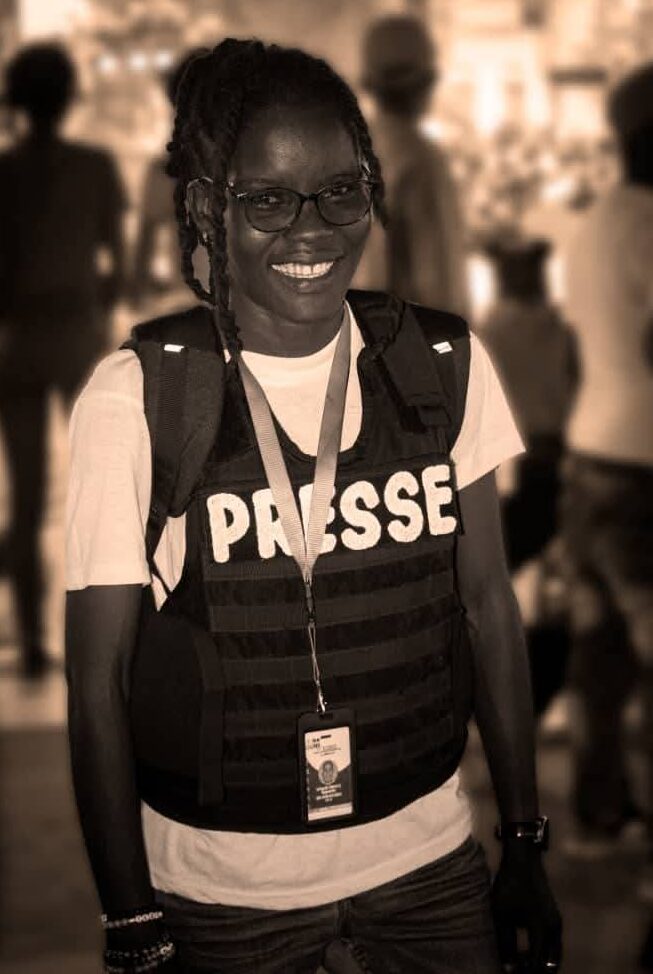
Journalist Velondie Miracle said she is still suffering from the lingering effects of her injuries. (Photo: Jean Feguens Regala)
Miracle, who at the time was working as a photojournalist for the online platform Nouvèl 509, said she positioned herself near the hospital's main entrance to capture the arrival of the then-Minister of Health, Duckenson Lorthé Blema.
As she waited, officers in a police vehicle approached and exchanged words with the reporters when the gunfire began.
“I took seven bullets: one to the head, one near the mouth and five in the left leg,” Miracle told LJR.
Her recovery has been inconsistent. She was one of three injured journalists who were transferred to Cuba to receive specialized care, as part of the efforts of an aid commission.
According to a report by that commission one month after the attack, Haitian authorities pledged to transfer the three journalists and a police officer to Cuba. The Haitian Embassy in Havana would reportedly ensure that everything proceeded without incident.
Miracle traveled to Cuba on Jan. 30, 2025. There, she received adequate medical care —very different from what she was provided in Haiti.
“I thank the Cuban doctors—after God—for without them, I would probably be dead,” she said.
However, despite the commitments made, the journalist said the Ministry of Health did not fully take charge of her treatment. On occasion, Miracle said, she had to purchase medications at her own expense, as the Ministry did not always respond to her in a timely manner.
While she was in Cuba, a gang member extorted her with threats to attack her home in Port-au-Prince. The journalist was unable to pay the demanded sum, and six days later, her house was set on fire with her 20-year-old brother inside, as Miracle told Scripps News in May 2025. He did not make it out alive.
The journalist returned to Haiti in March of that same year. She’s now back in her home country, but said she is still suffering from the lingering effects of her leg injuries.
“The State has abandoned me. I don’t even have a home to stay in. I have a five-year-old daughter for whom I am both father and mother,” she said. “I don’t really have a stable place of residence. Sometimes I sleep at friends’ places, and other times—when I find someone to help me—I pay for a night at a hotel to have a place to stay.”
Miracle said that she needs to continue treatment for her injuries and undergo physical therapy. A cousin residing in Argentina offered to support her in receiving medical care in that country. Although she said that the current Minister of Health, Sinal Bertrand, agreed to help her obtain a visa so she could travel, she has not heard from him since.
Miracle is clear that she is not yet in a position to return to work—especially given that practicing journalism in her country is becoming increasingly difficult.
“Some journalists are forced to limit their movements or practice self-censorship to avoid risks,” she said. “Nevertheless, they continue to do their work to inform the public, often with courage and determination.”
LJR reached out to the Minister of Health and the Prime Minister of Haiti for this story, but received no response by the time this article was published.
More than a year later, Florise Desronvil still lives with the physical and emotional aftereffects of the attack on the hospital. The violence she endured that day left scars not only on her body but also on her professional and personal life.
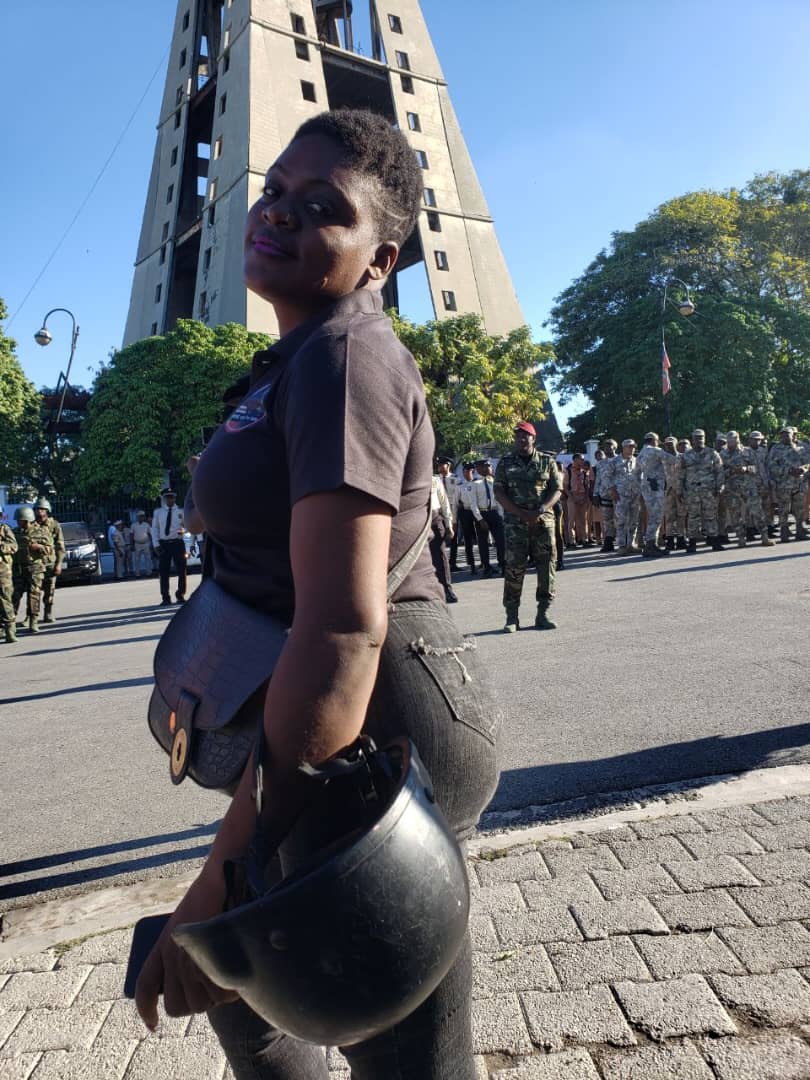
Journalist Florise Desronvil said she feels abandoned by the authorities who promised her help. (Photo: Courtesy Florise Desronvil)
Desronvil witnessed the deaths of her colleagues, Natoux and Jean. She had time to get away from the hail of bullets, although two of them struck her, she told AyiboPost following the incident.
“I took a bullet in my waist and another under my left shoulder blade,” Desronvil told LJR. “To be clear, it wasn't the police who shot at us. It was the bandits.”
More than a year after the incident, she is still unable to run or walk for extended periods. And whenever she does, she must constantly take breaks, she said. But, beyond the physical aftereffects, the emotional trauma continues to haunt her.
“I still get scared when I hear gunshots,” she said.
Desronvil was another one of the victims transferred to Cuba under the promise of protection from the Haitian government. She traveled on Jan. 30 with a bullet still lodged in her pelvis, which threatened to leave her paralyzed.
In Cuba, she underwent surgery and received care—albeit limited—she said.
“To tell the truth, Cuba took good care of me, but they didn't have certain medications; they said that only the State of my own country could provide them to me,” Desronvil said.
Three weeks after their arrival in Cuba, Desronvil and her colleague Jocelyn Justin were discharged from the hospital due to the non-payment of their medical bills, according to the media outlet NAM-HATI. Following appeals for assistance and pressure exerted on the authorities by the organization SOS Journalistes, they were able to continue their treatment. Desronvil returned to Haiti on March 15, 2025, together with her colleague Velondie Miracle.
But she only encountered abandonment and tragedy.
“Since I left Cuba for Haiti, the State has forgotten me,” she said. “After the tragedy, my life was turned upside down. Even my child's school fees haven't been paid. My child's father has died.”
The lack of employment and resources has left her without access to the medications she needs to recover and cope with the pain of the aftereffects.
Desronvil said she lost her job at the digital outlet Zantray Tout Koté just two days after the attack, and although she has attempted to return to work, the precariousness and stigmatization of the profession in Haiti have prevented her from doing so.
“Because the government took us to Cuba, our colleagues now assume that we are flush with cash simply because we went there,” she said. “ It places me in a difficult situation.”
Like her colleagues, she feels abandoned by the authorities who promised her help.
“I’m sick of going to see them, writing to ministers, and calling them, only for them not to care about me,” she said. “The situation of journalists in Haiti is precarious; our lives are like rentals, with non-renewable contracts.”
Nearly a year had to pass before journalist Jocelyn Justin underwent the surgery he needed to reconstruct his lower jaw, which had been shattered by a gunshot wound sustained during the attack on the hospital.
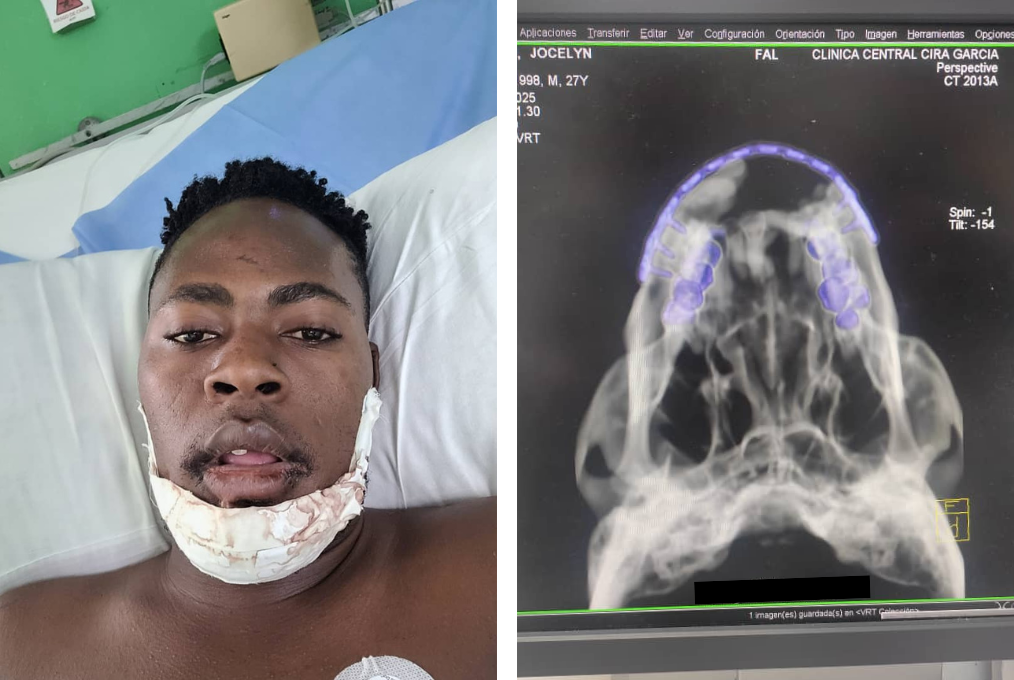
Journalist Jocelyn Justin had to wait nearly a year for a maxillofacial surgery. (Photo: Courtesy Jocelyn Justin)
That injury marked the beginning of a long and painful recovery that, to this day, has not ended. But it also marked the start of a long odyssey of pleas for help from Cuba, where the journalist was transferred to receive medical care.
Currently, his situation is further complicated by the political and social situation Cuba is facing, due to the tightening of sanctions by the U.S. government.
“The cost of living in Cuba is extremely high, and I am struggling to afford medication, food and even my monthly rent,” Justin told LJR. “Occasionally, I receive small gifts from friends, which help, but it's still a tough situation.”
Justin underwent emergency surgery in Haiti following the attack, and in January 2025, he was transferred to Cuba along with Miracle and Desronvil. The women spent nearly a month and a half on the island, but Justin had to stay behind because his maxillofacial surgery was scheduled for July of that year.
In a room in Santiago de Cuba, Justin awaited surgery while in pain and enduring complications. Without clear explanations, he said the Cuban doctors referred him to his country's authorities every time he asked for help.
July 2025 arrived, and the surgery could not be performed. In August, his health deteriorated: he began bleeding from the mouth and emitting a foul odor, as reported at the time by SOS Journalistes. The Minister of Health told LJR in October that, in order to deliver funds to the journalist, an emissary had to be sent personally to Cuba—a task that had proven difficult.
However, the official clarified that Justin had received financial support in July.
After multiple messages to the Minister of Health—and even a desperate letter to Haiti's Prime Minister, Alix Didier Fils Aimé—Justin finally underwent surgery on Dec. 2—almost a year after the attack—following a payment of $4,600 from the Haitian government.
Although the surgery was successful and, medically speaking, his condition appears to be improving, Justin said, postoperative care and recovery have proven to be an enormous challenge. The surgeon prescribed a liquid diet and very expensive medications, which he cannot afford, he said.
The journalist said he must return to the hospital in April to have a plate inserted in his mouth so he can eat normally again. Once the doctors give him the green light, he will be able to return to Haiti, he added.
Until that moment arrives, Justin must find a way to survive. In February, he issued a new urgent appeal to the Haitian authorities to help him cover his housing, food and medical expenses. However, he said he hasn’t received a response.
“I have no one, and I am suffering deeply. No one wants to help me,” he said. “I am like a little child now. I feel ashamed in front of people. This suffering and this pain are killing me; I can’t go on anymore.”
This article was translated with the assistance of AI and was reviewed by Jorge Valencia


