
Latin American journalism showed once again in 2025 that innovation depends not only on technology, but also on the creativity of journalists.
With projects ranging from cross-border, artificial intelligence-driven investigations to immersive audio narratives, news outlets in the region again found proactive ways to reveal abuses of power, expose the political influence of corporations, make migrant tragedies visible, document historical violence and uncover criminal economies.
This year, LatAm Journalism Review (LJR) selected 10 innovative projects that made headlines in 2025. These works experimented with methods, languages or platforms to strengthen coverage in an increasingly challenging environment.
The Brazilian investigative outlet Agência Pública and the Latin American Center for Investigative Journalism, or CLIP for its initials in Spanish, led a collaborative investigation that involved 17 other news outlets in 13 countries. The project exposed how major technology companies use their economic power and global reach to influence governments around the world.
Over nine months, the participating outlets analyzed how these corporations lobby and pressure legislatures and authorities to shape laws that benefit them, influence public policies and avoid regulations. The investigation also showed how these actions threaten information pluralism and independent journalism.
The project compiled data, documents and government statements and compared them across countries to offer a global overview of the issue. In addition, an interactive database was created containing nearly 3,000 lobbying actions identified by the team.

Title: “The Invisible Hand of Big Tech”
Outlets: Agência Pública (Brazil), CLIP (Colombia), elDiarioAR (Argentina), Crickey (Australia), Núcleo Jornalismo and ICL (Brazil), IJF (Canada), La Bot (Chile), Cuestión Pública (Colombia), Primicias (Ecuador), Factum (El Salvador), TechPolicy.Press (United States), Tempo (Indonesia), N+ Focus (Mexico), Lighthouse Reports (Netherlands) and Daily Maverick (South Africa).
Publication date: September 2025
Why it is innovative: For addressing a global conflict in a coordinated, collaborative way across five continents and for producing an unprecedented database that provides evidence of Big Tech’s reach.
This investigation by the Mexican newspaper El Universal, in partnership with The Washington Post and Lighthouse Reports, documented the dramatic rise in migrants drowning as they attempted to cross the Río Bravo along the U.S. border. The project reconstructed how, beginning in 2021, deaths in the river surged to at least 1,000 cases, including children and teenagers.
The report, part of a series titled “To Migrate, the Only Path,” combines official data from U.S. and Mexican agencies with accounts from families who saw their children or partners swept away by the current. The investigation also connects the increase in deaths to increasingly strict anti-immigration policies in Texas and Mexico.
The project won the 2025 Gabo Award in the Coverage category for what the jury called its “exhaustive, distinctive and analytical” approach to an issue that “had not been addressed with this level of rigor.”
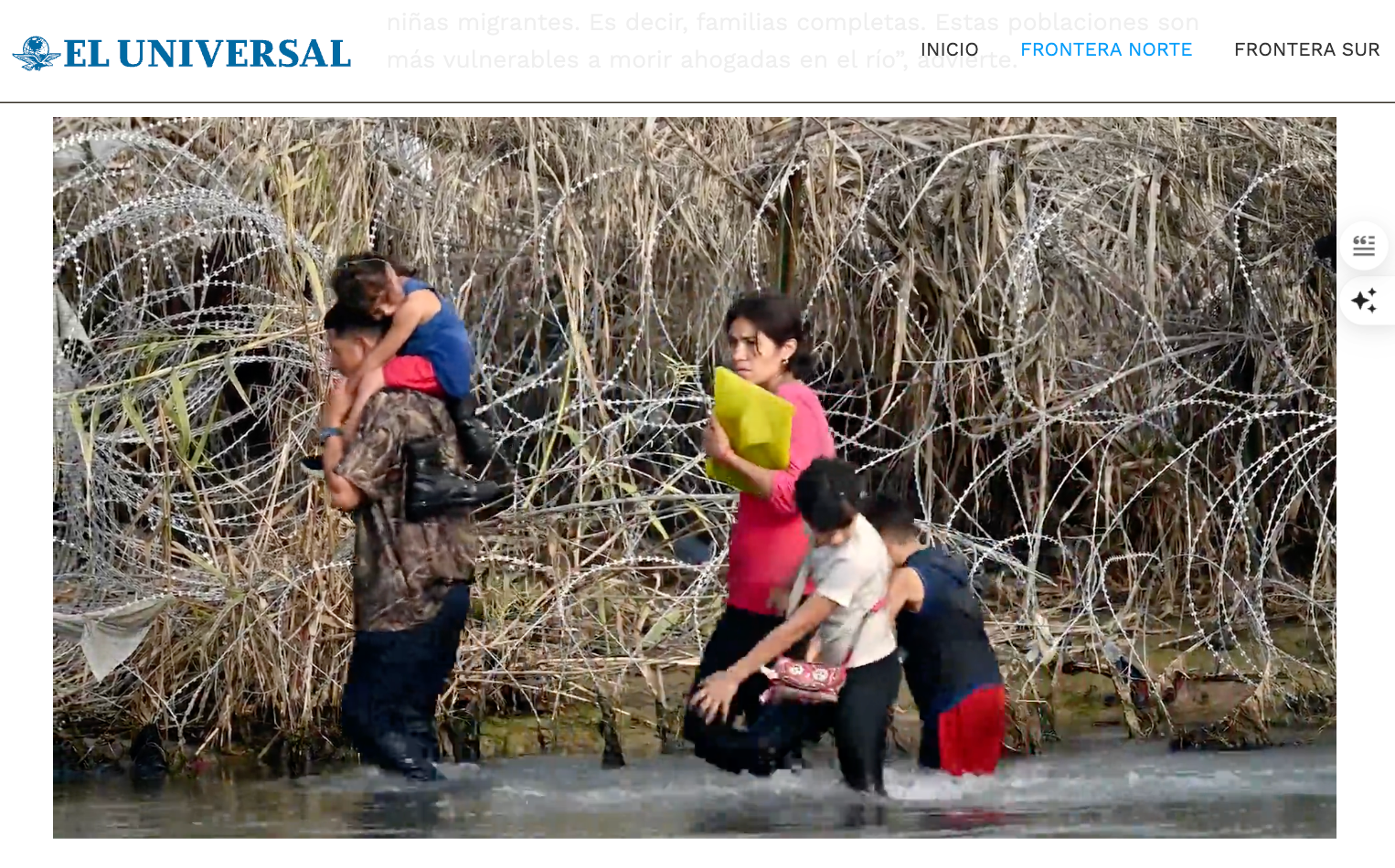
Title: “Río Bravo, the current that claimed 1,000 migrant lives”
Outlets: El Universal (Mexico), The Washington Post (United States) and Lighthouse Reports (Netherlands)
Publication date: December 2024
Why it is innovative: For building databases of official information and cross-referencing open-source data, which allowed the team to find information that authorities had not identified. The work includes an interactive graphic that connects drowning deaths to migrant inspection points, military presence and anti-immigrant infrastructure along the Texas border.
Agência Pública of Brazil carried out an ambitious investigation that revealed the genealogical ties of today’s political elite to slave owners from Brazil’s colonial and imperial eras.
The project, based on genealogical sources and historical records, mapped the ancestors of 116 high-level Brazilian authorities, including former presidents, senators and governors, and found that at least 33 of them have direct links to slavery.
The genealogical investigation took nearly a year to complete. A team of 12 journalists and five academic researchers from the Federal University of Paraná analyzed about 500 documents and conducted a verification process that included interviews and follow-ups with politicians.
The project won the Cláudio Weber Abramo Award for Data Journalism in October 2025 in the Investigative category.

Title: “Projeto Escravizadores”
Outlet: Agência Pública (Brazil)
Publication date: Nov. 19, 2024
Why it is innovative: It is considered unprecedented in Brazil for using techniques from genealogy, historical research, data analysis and artificial intelligence in a journalistic investigation. It also stands out for the unique collaboration between journalists, genealogists and academics.
This is an investigation by the environmental outlet Mongabay Latam, in collaboration with the U.S.-based technology and data organization Earth Genome.
It consists of five reports and an interactive map detailing the discovery of 67 clandestine airstrips linked to drug trafficking in areas where violence against Indigenous leaders is rising in the Peruvian Amazon. Using satellite analysis, flyovers, flight records and on-the-ground reporting, the investigation found that the narco airstrips are located in parts of the Amazon where illegal crops, deforestation and forestry concessions intersect.
The project took an unprecedented turn when it was adapted with theatrical elements into a “news stand-up” performance with advice from Rutas del Conflicto, the Colombian collective that pioneered the format in Latin America. In the stage piece, journalists who worked on the investigation shared their experiences creating the report.
The project won the Global Shining Light Award from the Global Investigative Journalism Network (GIJN) in November 2025 and was a finalist for the 2025 Gabo Award in the Coverage category.
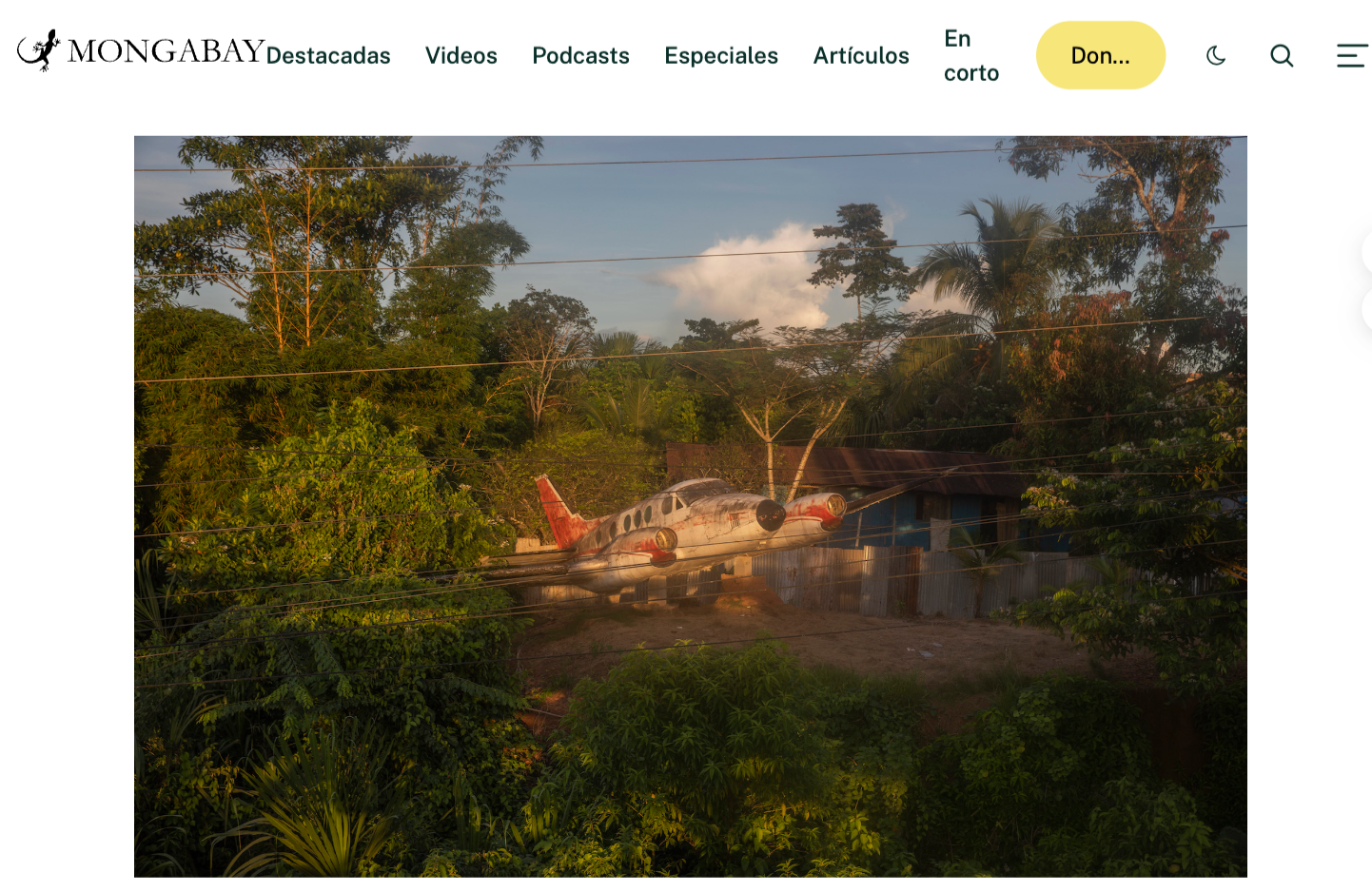
Title: “The Flights of Death”
Outlet: Mongabay Latam in Peru
Publication date: Nov. 12, 2024
Why it is innovative: The series became a benchmark by integrating satellite analysis to track suspicious aerial activity and layering it with data from official sources. The stage adaptation brought the issue to new audiences and amplified its impact.
Salvadoran anthropologist and journalist Juan Martínez d’Aubuisson is the author of this investigation, published by Dromómanos and Redacción Regional. The project began with a video Martínez d’Aubuisson received anonymously, showing two Dominican Republic police officers chasing a young Haitian man across rooftops before throwing him into the void. From that scene, the journalist began a six-week search to find out whether the man was alive.
Along the way, he reconstructed the young man’s identity through a narrative that blends the personal with the broader context of the systematic persecution faced by Haitian migrants in the Dominican Republic. The report showed how migration policies translate into a “de facto apartheid” against Haitians and their descendants, with practices that include raids, mass deportations and the separation of mothers and children.
Martínez d’Aubuisson also uncovered other cases of people thrown from rooftops, police attempts to disappear bodies and a climate of impunity surrounding racial violence. The work won the 2025 Gabo Award in the Text category and received second place in the Latin American Investigative Journalism Award from COLPIN 2025.
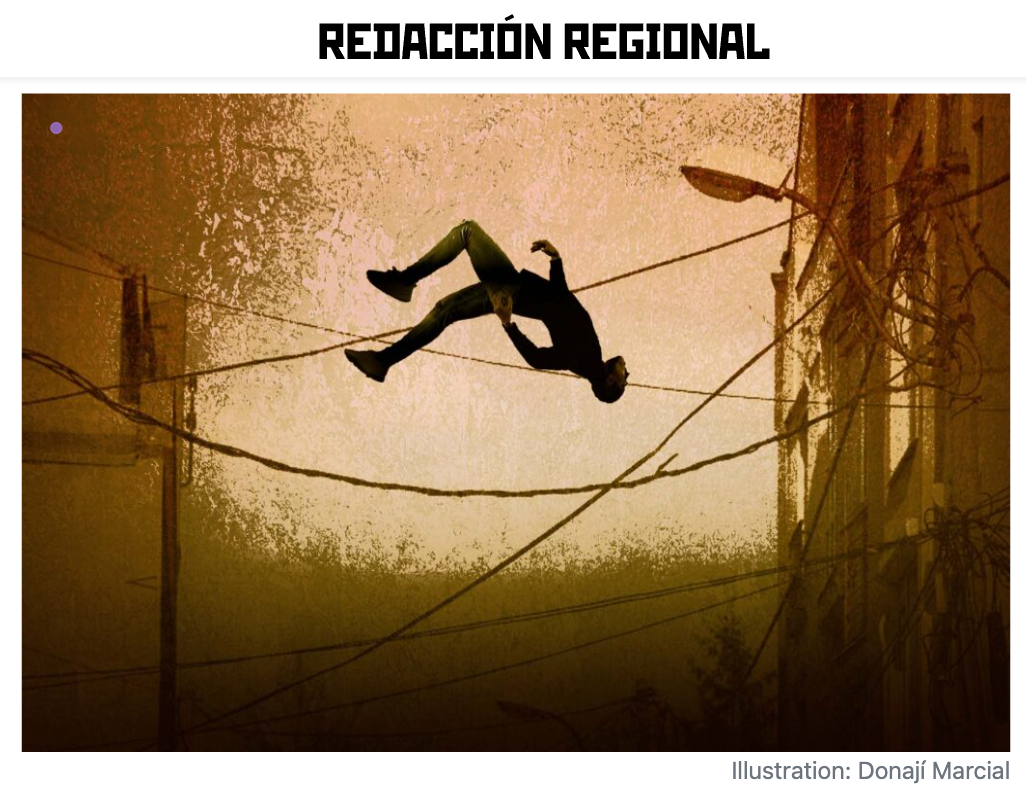
Title: “Searching for Mikelson: an apartheid in the Caribbean”
Outlets: Redacción Regional (Central America) and Dromómanos (Mexico)
Publication date: December 2024
Why it is innovative: For turning a single piece of evidence into the starting point of a deep investigation that combined field reporting, narrative reconstruction and structural analysis of migration policies.
This biographical podcast dives into the life of Chilean musician Jorge González, frontman of the iconic rock band Los Prisioneros. The six-episode series, narrated by journalist Nicolás Alonso, is based on extensive and rigorous research carried out by Alonso along with Podium Podcast Chile editor Jorge Aspillaga.
The yearlong investigation drew on unpublished records, personal cassette tapes and video archives spanning more than three decades, as well as interviews with musicians, producers, friends and family members of González. The script integrated research and music into a compelling narrative.
According to their parent company PRISA Media, the creators were able to produce an immersive narrative thanks to cinematic editing, sound design, original music and AI tools.
The podcast won the 2025 WAN-IFRA Digital Media Awards for Best Use of Audio in both the Americas edition and the global competition. It was also a finalist in the Audio category of the 2025 Gabo Award.

Title: “I Need to Be Able to Breathe: The Life of Jorge González”
Outlet: Podium Podcast Chile
Publication date: November and December 2024
Why it is innovative: For combining in-depth research, the collection of previously unpublished material and the use of cinematic sound-editing techniques and AI to create an immersive biographical narrative.
This pioneering project from La Nación used AI techniques to analyze the rhetorical tools Argentine President Javier Milei uses to craft his political narrative. The analysis identified nine key characteristics of Milei’s discourse, including his frequent use of insults, his construction of himself as a “savior,” and his recurring use of hyperbole.
A multidisciplinary team of 14 professionals — including journalists, political analysts, AI experts, programmers, designers and video editors — spent two months transcribing and analyzing a body of 739,000 words drawn from 58 long interviews and 84 official speeches by the president, with the goal of identifying linguistic patterns.
The project won WAN-IFRA’s 2025 Digital Media Awards Worldwide for Best Use of AI in the Newsroom. According to the organization, the investigation surpassed 50,000 views, had an average reading time of more than two minutes and generated subscriber conversions.

Title: “This Is How Milei Spoke to Us: 9 Libertarian Storytelling Tricks to Build a New Common Sense”
Outlet: La Nación (Argentina)
Publication date: Dec. 10, 2024
Why it is innovative: The project combines linguistic analysis, AI techniques, quantitative data and interactive visualization for an in-depth discourse analysis. Its multidisciplinary approach and methodological rigor made it possible to identify rhetorical patterns and clearly explain the communicative strategies of a president.
ScribNews is the proprietary AI platform developed by the Argentine outlet Infobae to support the work of more than 470 journalists in Argentina, Mexico, Colombia, Peru, Spain and Miami.
Designed to apply the outlet’s style, language and editorial standards, the platform offers 50 tools for every stage of production, from trend detection to writing and sending articles.
According to Infobae executives, the integration of ScribNews has increased productivity among its journalists by about 35 percent.
ScribNews includes a feature called “Autonomous,” which assists journalists in the “layout” process of an article — the final step in producing a news story, in which the piece is organized and formatted. This allows the journalist to simply approve or reject the final product before publication.

Title: ScribNews
Outlet: Infobae (Argentina)
Public launch: July 2025
Why it is innovative: It’s an initiative that builds proprietary infrastructure integrated into the outlet’s content management system, or CMS. It offers a glimpse of how newsrooms could be organized in a possible future of widespread AI adoption.
This is a media literacy course designed for Brazilians older than 60. It came out of a collaboration between the fact-checking organization Agência Lupa, the Fluminense Federal University and the municipal government of Niterói. The course focuses on training older adults to navigate the digital environment critically, detect disinformation and protect themselves from online scams.
The program was offered for the first time in person between August and September 2025. It consisted of six classes taught by a journalist from Agência Lupa. The sessions addressed concrete examples, such as scammers posing as family members, miracle product offers and how to safely carry out banking procedures.
Members of Agência Lupa said the experience gave them concrete insights into how to structure media literacy for older adults. They also said they plan to repeat the program and replicate it in other parts of the country.
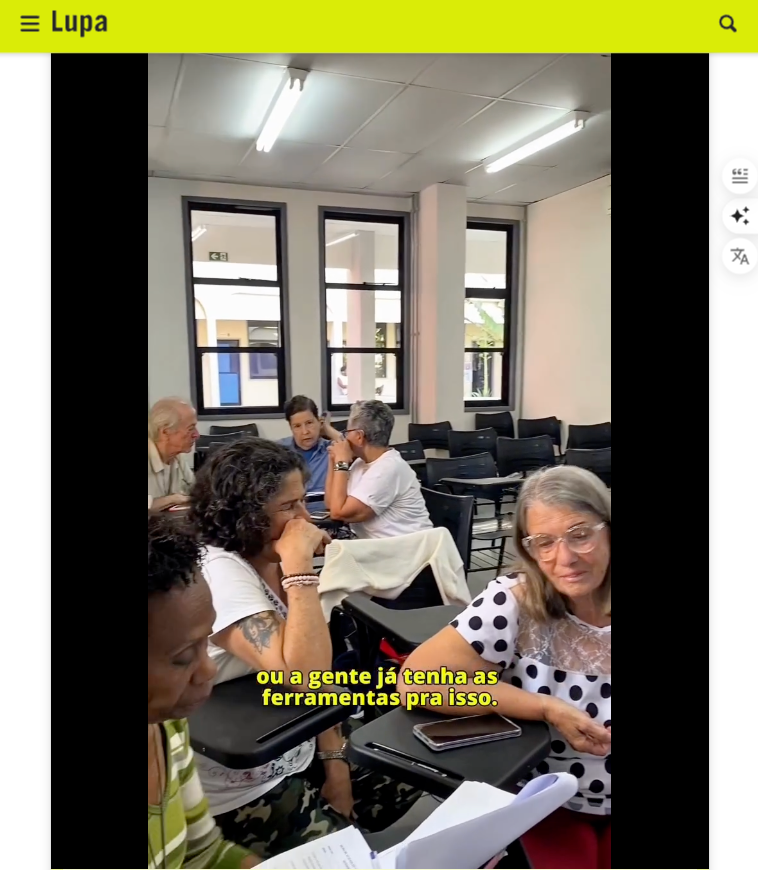
Title: “Você no Controle”
Outlet: Agência Lupa (Brazil)
Dates: August and September 2025
Why it is innovative: It is a pioneering initiative to train older adults in digital skills in a country where online scams targeting this population have soared, and where older adults are often seen as a lower-priority group for media literacy initiatives.
In 2024, the investigative digital outlet Convoca led a coalition of partner newsrooms to carry out a cross-border investigation that uncovered the hidden dynamics of illicit gold trafficking in South America and its effects on ecosystems and Indigenous peoples.
A team of about 20 journalists identified a complex system of gold laundering and diversion through field reporting and massive data analysis of public institutions in Peru, Venezuela, Colombia, Ecuador and Brazil. The result was a series of multimedia reports published in Spanish, English and Portuguese.
This year, the project expanded into a podcast series detailing the most important findings of the investigative process. The project received the 2025 King of Spain Journalism Award, whose jury praised its innovative quality for “breaking journalistic molds” and offering “a type of reading different from the classic model.”

Title: “Golden Opacity: The Mechanisms of Massive Gold Trafficking in South America”
Outlets: Convoca (Peru), Repórter Brasil (Brazil), Consejo de Redacción and Rutas del Conflicto (Colombia), Plan V (Ecuador), and Armando.info, Runrunes, El Pitazo and Tal Cual (Venezuela).
Publication dates: June 2024 – August 2025
Why it is innovative: For offering a systemic view of gold trafficking in South America through massive data analysis made possible by cross-border coordination. It also stands out for expanding the investigation’s findings into multiple formats over more than a year.
This article was translated with AI assistance and reviewed by Jorge Valencia


