
Scientists support euthanasia, while animal rights activists oppose it. How should journalists balance scientific evidence with emotional response?
The news this month that Colombian authorities were planning to euthanize 80 hippos in the Andean region sparked visceral reactions — both because it addresses the legacy of one of the most infamous figures in the country’s history and because it involves killing animals.
The Ministry of Environment and Sustainable Development said it reached its decision based on scientific evidence, after multiple failed attempts to control what has become an invasive species. There are currently an estimated more than 200 hippos, a figure that, according to the ministry, could exceed 500 by 2030.
The plan was well received by biologists and scientists, who for years have warned about the impact of the descendants of the four hippos that Pablo Escobar brought to his hacienda in 1981. But animal rights advocates, including members of Congress and influencers, rejected it and quickly responded by criticizing both the proposal and the experts who support it.
Some media outlets have given disproportionate attention to non-expert voices that express public outcry and that, at times, have led to attacks against scientists, experts and science journalists told LatAm Journalism Review (LJR). At the same time, they say, insufficient space is given to expert voices that rely on concrete scientific evidence to support their positions, which delegitimizes experts and creates an artificial conflict of villains versus saviors.
“Biased airtime has been given to opinions that are not scientific,” Andrés García Londoño, a biologist with a master’s degree in ethology and a doctoral candidate in sustainable tourism, who has been part of working groups seeking solutions to the hippo problem, told LJR. “By giving more voice to these people, what we say is not validated, it’s not taken into account, and it even leads to events as unfortunate as us being threatened, being called murderers, being told we’ve been bought out. They take away our visibility and our humanity. They dehumanize us.”
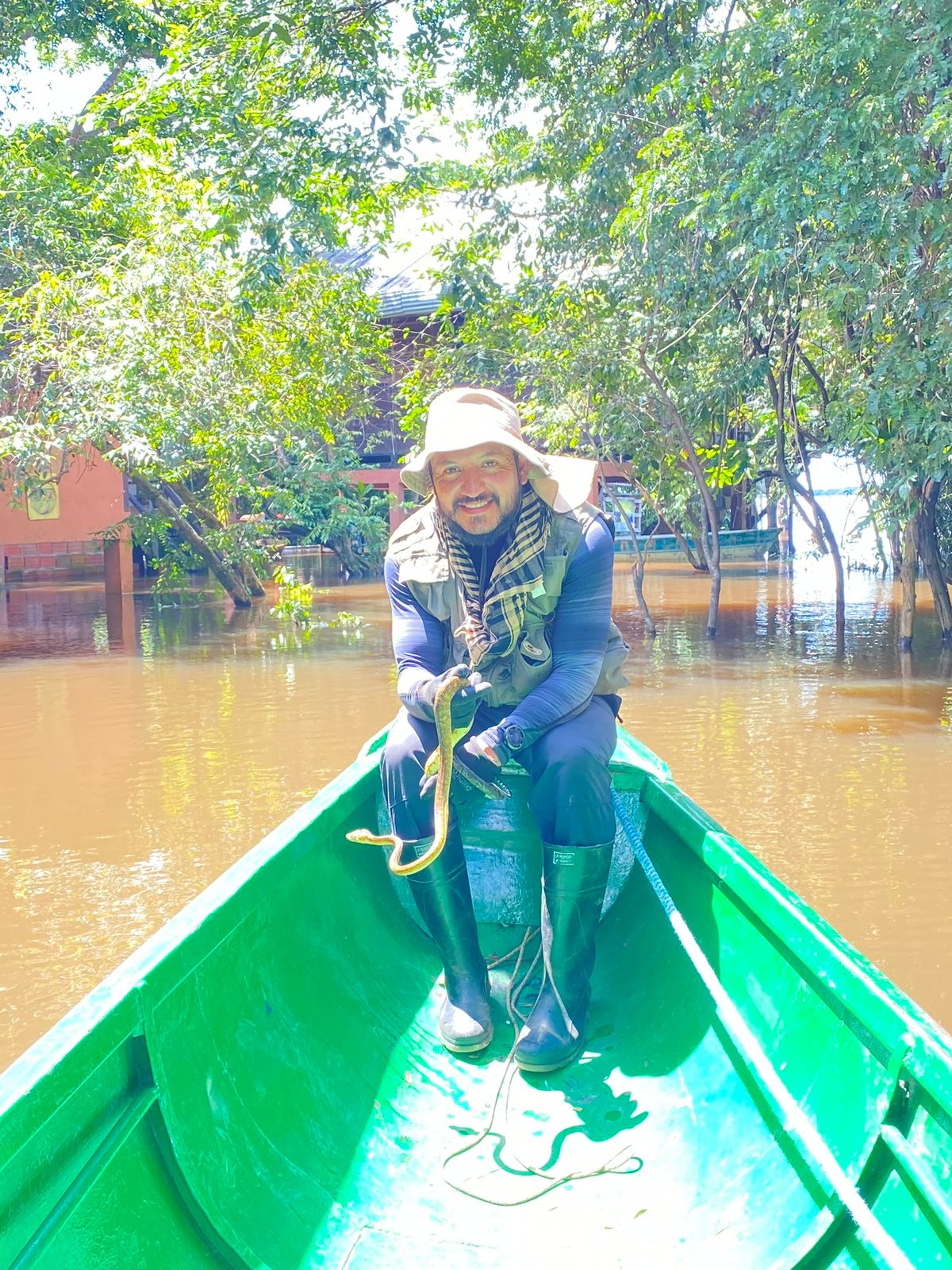
Andrés García-Londoño, director of the Fundación Bioethos, biologist with a master’s degree in ethology and a doctoral candidate in sustainable tourism. (Photo: Fundación Bioethos)
García, director of the Fundación Bioethos, is one of several biologists who have been profiled by anonymous accounts on platforms such as X. They have received threats. In some cases, their personal information has been exposed, and there have even been offensive AI-generated images of them.
Another expert who has faced this kind of harassment is Nataly Castelblanco, a biologist and PhD in ecology, an expert in aquatic and semi-aquatic mammals with nearly 30 years of work in manatee conservation. Castelblanco, a researcher at El Colegio de la Frontera Sur in Mexico, was linked through her research to the working groups tasked with controlling the hippos. The media, she says, have sought a “sensationalist” angle in the story.
“Yes, I do think things are unbalanced,” Castelblanco told LJR. “Everyone is free to give their opinion and you [journalists] are free to ask whoever you want, but the problem is looking for that sensationalism, for where the fight is. And what’s interesting is that there are many points we have in common: we all like animals, we all like nature.”
Castelblanco added: “Journalists have turned virtually anyone into an expert.”
Examples cited by experts illustrating false equivalence include headlines such as “Environmental expert proposes another solution for Pablo Escobar’s hippos: it would not involve euthanasia” from El Tiempo, “Biologists and environmentalists in conflict over Pablo Escobar’s hippos” from Caracol Radio, or “Controversy over the future of Pablo Escobar’s hippos: between science and ethics” from Cambio. A viral interview with animal advocate Nicolás Ibargüen by Daniel Coronell, one of the country’s most prominent journalists, also drew criticism.
Experts have also pointed to the attention given to Ernesto Zazueta, president of the Association of Zoos, Breeders and Aquariums in Mexico, who claims to have a plan to relocate these animals to Mexico and India, without mentioning that some of the sanctuaries have been accused of alleged wildlife trafficking and that the Mexican government has already rejected the proposal.
It is precisely in source selection where the problem lies in covering complex topics that require addressing impacts on native ecosystems (including rural communities), studies conducted on those impacts, and proposed solutions.
“These are moments in which the importance of good journalism in general and good science journalism in particular becomes even more evident and clear,” Pablo Correa, head of the master’s program in science journalism at Pontificia Universidad Javeriana in Bogotá, told LJR. “A good science journalist in this case should be able to capture those complex elements and present them to a citizen who needs to take a position.”
That complexity requires going beyond listening to two sides of a story and adding another journalistic principle: the warning against false balance. Voices are not like a birthday cake where each gets an equal slice, Correa said.
“A good journalist should be interested in listening to all positions and all arguments, but when presenting them to an audience, they have the responsibility to also weigh each one of them,” Correa said. In the coverage of climate change or cigarettes, for example, covering tobacco companies is not the same as covering doctors and scientists speaking about health effects, he said.
“It is not about excluding voices, but a good journalist must also confront those voices with the most solid arguments and indicate for the audience who carries more weight in each debate, with data and arguments,” he said. “The problem is that many journalists limit themselves to ‘I have to give both sides a voice’ and that creates a problem.”
Sergio Silva Numa, editor of the Science, Health and Environment section of the Bogotá newspaper El Espectador, agrees. Silva, a “strong believer” in science journalism, believes researchers are the ones who “should shine” in the media because of their years of study.
“That does not mean excluding anyone,” Silva told LJR. “But I think it must be given proper proportion, which is what I am not seeing from several colleagues who sometimes exclusively turn to animal rights activists.”
With sensitive topics such as hippos, journalism plays a “key” role because it can either give audiences a guide to confront misinformation or distort public debate. A first step, he said, is to seek the appropriate sources — in this case, people with master’s and doctoral degrees on hippos and large aquatic mammals.
These coverage flaws show the limited space science journalism has in newsrooms, he said.
“They certainly are not given the place they deserve,” Silva said. “There are only a handful of media outlets that have a robust section of journalists dedicated exclusively to writing about science-related topics.”
For Correa, journalist specialization is important — not necessarily academic, but in terms of sustained time working with sources.
“It is difficult to find a media outlet in Latin America where they would assign a sports journalist who does not know sports. That does not happen. Nor does it happen with politics,” Correa said. “But it does happen with these topics because they are underestimated.”
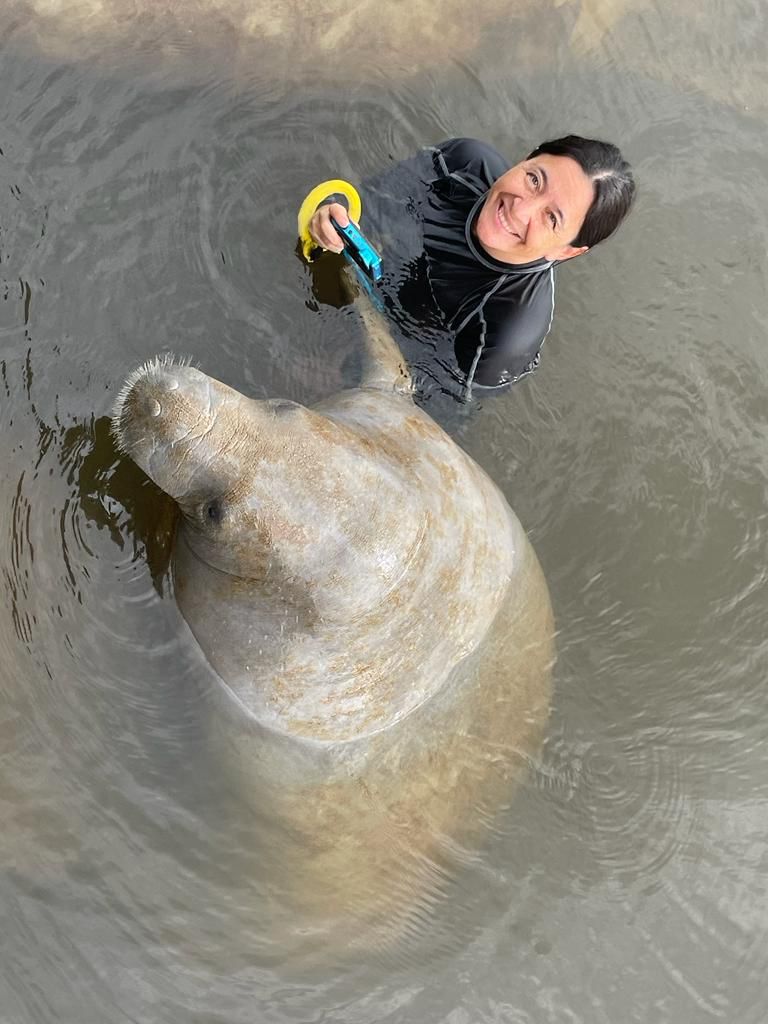
Nataly Castelblanco, biologist and PhD in ecology, an expert in aquatic and semi-aquatic mammals with nearly 30 years of work in manatee conservation. Researcher at El Colegio de la Frontera Sur in Mexico. (Photo: Courtesy)
Finally, Silva said fact-checking exercises on other journalistic pieces would help improve the profession.
The four hippos from Escobar — three females and one male — were left on their own after Pablo Escobar was killed in 1993. Over the years, they found the Magdalena River ecosystem favorable and have spread into the neighboring departments of Santander and Bolívar.
The “population decline” of animals such as the manatees, otters, and jaguars could be accelerated due to the presence of hippos, García and Castelblanco explain. This occurs for three reasons: water pollution, displacement of other species, and direct attacks.
Opposition to euthanasia dates back to 2009, when a hippo was killed with government authorization. The photograph showing the animal’s body and military personnel around it generated a strong animal rights movement that has since pressured authorities to avoid lethal measures and instead pursue relocation and sterilization. This month, a judge accepted a legal injunction to halt euthanasia, arguing it violates animal protection principles.
In the environment ministry’s recent statement, it was reported that implementation of the current plan costs 7.2 billion Colombian pesos (about US $2 million), that none of the contacted countries agreed to accept specimens, and that sterilization efforts have faced difficulties.
This article was translated with AI assistance and reviewed by Jorge Valencia


