
Spanish journalist and digital journalism expert Carmela Ríos gives five tips for filtering, organizing and analyzing the informational chaos of social media to uncover stories with journalistic value.
On social media, information circulates under conditions that challenge traditional journalistic practices. The speed at which content is published, the sheer volume of it and the variety of formats create an environment that is complex to navigate, said Carmela Ríos—a Spanish journalist, professor and digital communication consultant.
For Ríos, journalists seeking to use social media as a source for stories face the challenge not only of finding relevant information, but also of knowing how to organize and analyze it appropriately.
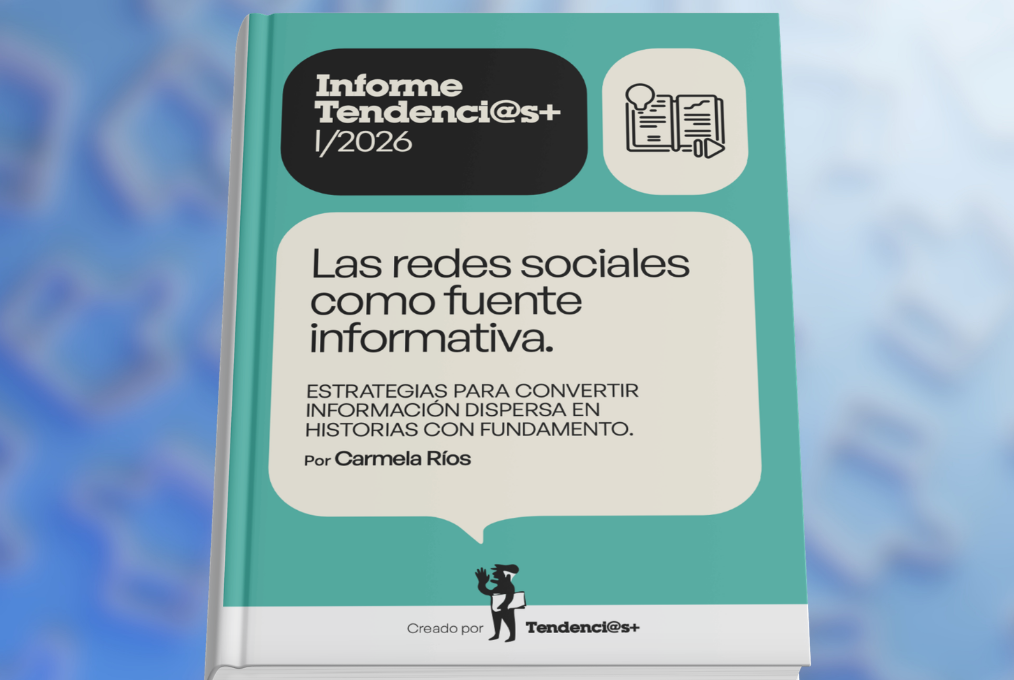
Carmela Ríos sought to document in her book what she has practiced for more than a decade using social media for journalism. (Photo: Tendenci@s+)
In her new book, “Social media as information sources: Strategies for transforming dispersed information into well-founded stories”—published in Spanish in collaboration with Tendenci@s, a newsletter specializing in media and digital content—Ríos proposes a series of practices to help journalists delve into the world of social media more systematically.
The author—who writes about social media for Spanish newspaper El País and has been recognized for her coverage on these platforms—said that the book stemmed from her desire to document the working method she has been applying for over a decade to manage and organize digital information flows.
“It wasn’t about theorizing, but about sharing what I learned,” Ríos told LatAm Journalism Review (LJR).
Below, we present five key recommendations from Ríos for using social media in your reporting process.
One of the most common mistakes when using social media as a source is doing so passively—letting algorithms decide what information is seen, Ríos said. This practice, she added, limits access to a much broader and more diverse wealth of content.
“Algorithmic browsing is anti-journalistic,” she said. “That is the great mistake: thinking that scrolling through your mobile phone [...] is a sufficient way to consume social media. I believe it is impoverishing.”
In light of this, Ríos proposes an active approach: that the journalists themselves determine what they want to see—and how they want to see it—by creating a specific user experience, through a certain manipulation of algorithms.
In practice, Ríos said, this can translate into the creation of lists—in the case of X (formerly Twitter) and Bluesky—the deliberate selection of profiles representing diverse ideologies, or even the creation of accounts configured to observe specific information ecosystems.
“For the upcoming elections in the United States, imagine a list containing everyone connected to [President] Trump—but also activists, influencers and even bots,” she said. “It’s an experience that provides you with much more information about how that election campaign is unfolding.”
Entering any social network is like entering a jungle where you have to hack your way through with a machete, cutting through the ‘undergrowth’ of irrelevant or even harmful content, to find something of journalistic value, Ríos said.
In an information-saturated environment like that, order is key to journalistic work, she added.
“The magic word for working in an environment as chaotic as social media, for me, is order: always seeking a way to organize information according to a specific criterion—which could be thematic, geographic and so on,” she said. “I believe that to move beyond the element of chance—the ‘I just stumbled upon a story’ factor—what we need to do is bring order.”
By applying this approach, journalists can detect patterns, recognize trends and identify potential stories of journalistic value, Ríos said.
The lists offered by X and Bluesky are the best tools for organizing how one consumes content on social media, although strategies for organizing information exist on every network, she said.
In an environment where information circulates constantly and without clear filters, Ríos proposes an initial rule: be skeptical. If content on social media does not originate from an identifiable source—such as a news outlet or a recognized journalist—the most prudent course of action is not to assume it’s true right off the bat, she said.
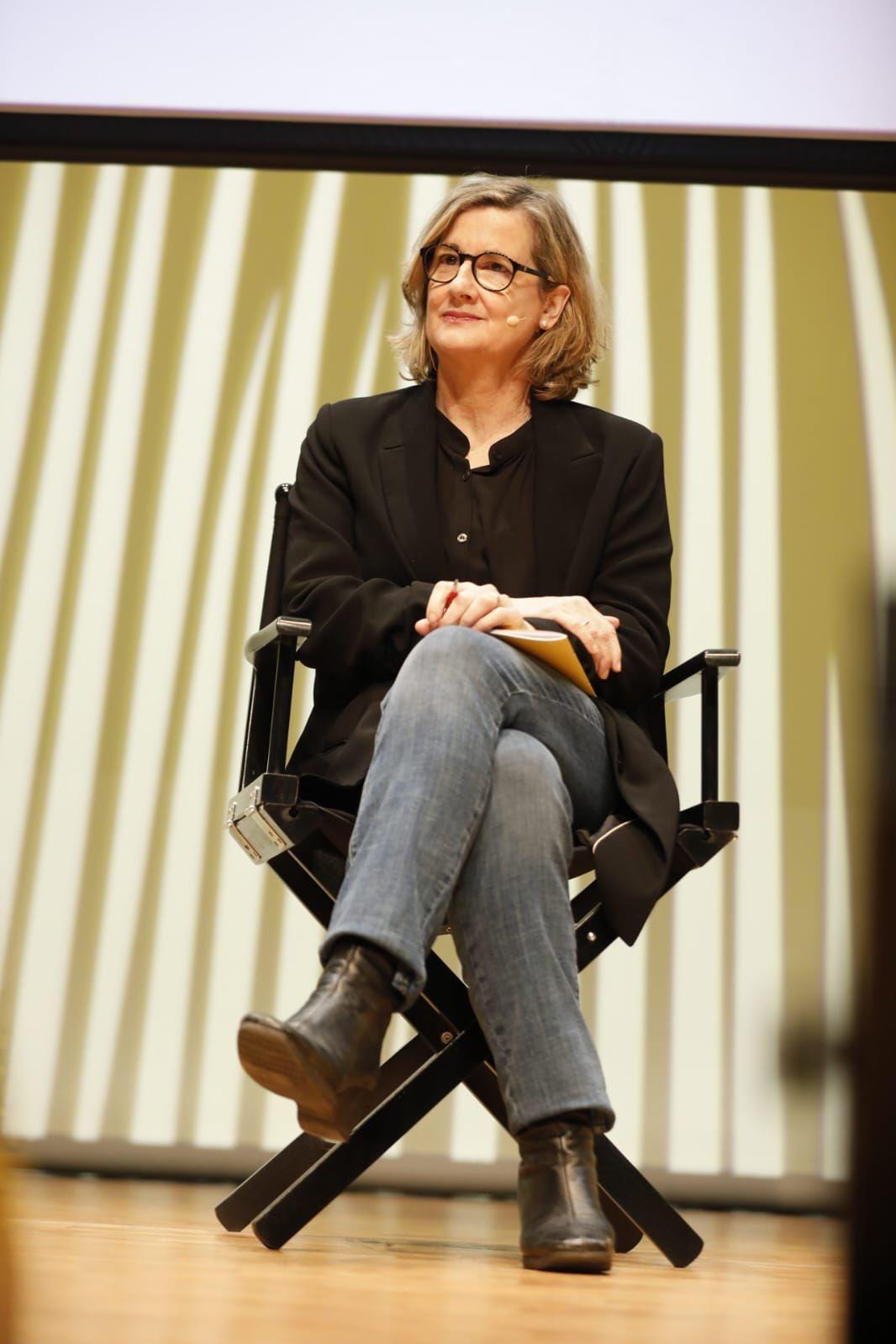
Ríos writes about social media for the Spanish newspaper El País and has been recognized for her coverage on these platforms. (Photo: Tendenci@s+)
This is not a radical approach; rather, it responds to a shift in the information ecosystem in which the avalanche of content has overwhelmed the capacity of fact-checking organizations, Ríos said.
“Although fact-checking organizations remain indispensable, they have been overtaken by another new necessity: that all journalists or communication professionals know how to work with these [verification] tools and, above all, that they know how to provide journalistic context to instances of disinformation,” she said.
Ríos recommends starting by analyzing the origin of the dubious information. Examining who is publishing it, how they are doing so and what history that account has—previous posts, name changes, location, etc.—can offer key clues regarding its credibility.
In her book, Ríos mentions a series of digital tools that journalists can turn to in order to delve deeper into verification—ranging from platforms for reverse image search and facial recognition technologies to systems capable of detecting AI-generated content.
“All of that provides us with context, allowing us to say, ‘This is a lie, the person who put it here is so-and-so, and they did it for this reason,’” she said. “In other words: turning disinformation into information.”
On social media, informational value does not always lie in what is already viral, but rather in what is just beginning to emerge, Ríos said. The expert noted that one of the main advantages of working in these environments is the ability to identify trends before they reach traditional media.
This occurs when certain topics, approaches or narratives begin to recur across multiple accounts or communities. To address this, journalists can turn to tools that help monitor trends—whether within the platforms themselves or through external resources—and track the evolution of those topics.
But beyond the tools, Ríos underscored the importance of how information is organized in order to anticipate trends.
“I know from experience that when you organize information, that sense of anticipating what’s coming is much more intense. You get ahead of things; you find out about things before anyone else,” she said. “And when you are a journalist, this is an asset to your work.”
Ríos added that when a journalist works with organized workflows—for example, by grouping sources by topic or coverage area—it becomes easier to detect early signs of trends. She recommends keeping an eye out for the emergence of “something that catches the eye and begins to repeat itself, or begins to replicate.”
The fact that social media serves as both a professional tool and a leisure tool poses the risk of losing focus, Ríos said. Although it is not a strict rule, she recommends maintaining a professional account (or several) distinct from one used for personal purposes.
Having accounts exclusively for professional purposes also allows for the creation of distinct profiles to play with the algorithms, so that they display different information, Ríos said.
“Imagine you notice that there is a lot of conversation surrounding a particular topic, but it isn’t reaching your personal account,” she said. “So, you ‘train’ [your algorithm for] your professional profile by following many accounts that are discussing that subject—liking their posts—to see what information the algorithm serves up to you, and to ‘hunt down’ other types of information.”
This article was translated with AI assistance and reviewed by Teresa Mioli


