

From data errors to bias and credibility risks, Latin American newsroom leaders say AI must be used with care, clear guidelines and constant human oversight.

A group of 171 women is demanding answers from former President Andrés Pastrana about photos and records tying him to Jeffrey Epstein and Ghislaine Maxwell. They say the government and most media outlets have failed to properly scrutinize him.
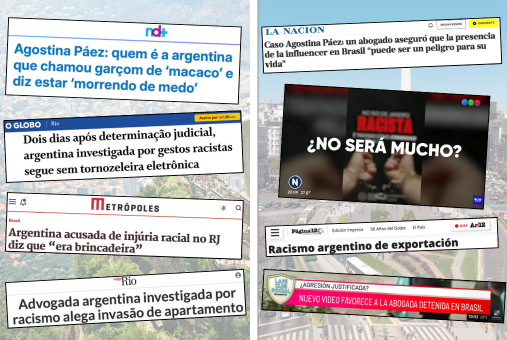
After an Argentine tourist was arrested in Rio de Janeiro, Brazilian outlets focused on her accountability. In Argentina, some centered instead on her vulnerability.

Omaya Sosa Pascual of Puerto Rico’s Center for Investigative Journalism receives the prestigious Maria Moors Cabot Gold Medal—marking the first time in 57 years the award has gone to a journalist from the island.

Film co-produced by Mexican actors Diego Luna and Gael García Bernal tells stories of journalists subjected to threats, attacks, forced displacement and exile, and who maintain their commitment to journalism and the public’s right to information.

Women's leadership in digital native media has been highlighted by several studies on the sector in Latin America. Managers of journalistic organizations in Brazil have overcome leadership models created by men to find their own styles of team management. They also emphasize the importance of creating and maintaining spaces for exchange with other women leaders in journalism.

The International Fund for Public Interest Media (IFPIM) seeks to support media in their audience strategies at the service of the public. Until July 1, independent media from Argentina, Brazil, Bolivia, Colombia, Costa Rica, Ecuador and Paraguay can submit to IFPIM’s open call and obtain financing for 24 months.

In the book “O pulpito” (The pulpit), Folha de S.Paulo journalist Anna Virginia Balloussier discusses topics such as entrepreneurship, politics, tithing, abortion and sex among evangelicals, seeking, as she says in the introduction, to avoid “falling into the trap of reducing individuals to stereotypes.” In an interview, she describes how she seeks to understand a highly heterogeneous phenomenon and responds to criticism of her work.
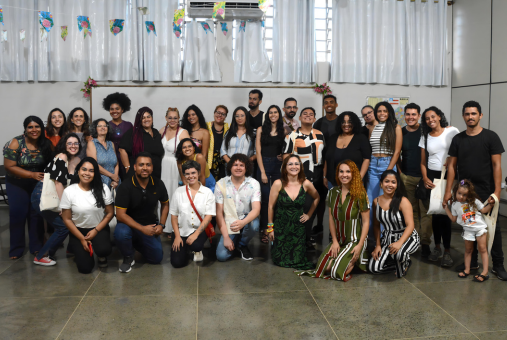
Ten local journalism organizations in Brazil’s five regions are participating in the Caravana project, run by the Brazilian Association of Investigative Journalism (Abraji). Local communities have been prominent in this process, which helps to establish a local sustainability network. LJR spoke with Coreto (Bahia) and Fala Roça (Rio de Janeiro) about participating in the project.
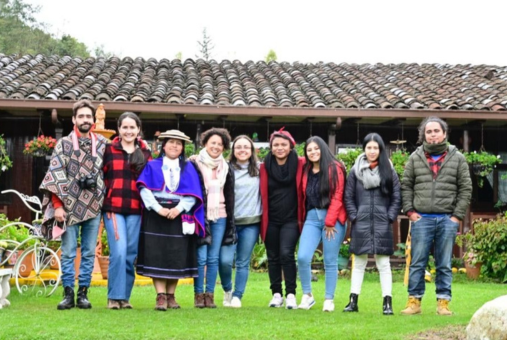
Red Tejiendo Historias, a project of digital media outlet Agenda Propia, is working on a security protocol for journalists and communicators reporting in Indigenous territories of Latin America. It’s based on two manifestos the network has written that call attention to risks they face when reporting.

The murder of a prominent nonbinary person in Mexico showed that most media in that country do not have protocols or tools to reflect the realities of this population in their stories. According to experts, beyond making good use of Spanish, journalism must reflect reality with precision, plurality and respect for human rights.

With interactive games, independent media outlets Cuestión Pública and Convoca, from Colombia and Peru, respectively, seek to bring the news to younger audiences, to contribute to greater media literacy and to present complex investigations in a playful way.